Personalized Medicine 2026: Genomic Innovations in US Healthcare

Anúncios
Personalized medicine, powered by advanced genomic innovations, is expected to reshape US healthcare by 2026, delivering highly individualized diagnoses and treatments for improved patient outcomes.
Anúncios
The landscape of healthcare is in constant evolution, but few areas promise as profound a transformation as personalized medicine. By 2026, the United States healthcare system is poised for a monumental shift, largely driven by incredible advancements in genomic research and technology. This article will delve into how genomic healthcare innovations are not just incremental improvements, but revolutionary forces, fundamentally changing how diseases are diagnosed, treated, and prevented across the nation.
The Dawn of Precision: Understanding Personalized Medicine
Personalized medicine, often interchangeably called precision medicine, represents a paradigm shift from a one-size-fits-all approach to healthcare. Instead, it tailors medical treatment to the individual characteristics of each patient. This means considering a person’s unique genetic makeup, environment, and lifestyle to determine the most effective course of action.
In 2026, this approach is no longer a distant dream but a rapidly unfolding reality, especially within US healthcare. The ability to analyze individual genomic data with unprecedented speed and accuracy is the cornerstone of this revolution. This data allows clinicians to predict disease risk, select optimal therapies, and monitor treatment responses with a level of precision previously unimaginable.
Genetic Testing: A Foundation for Personalized Care
At the heart of personalized medicine lies advanced genetic testing. These tests provide crucial insights into an individual’s predisposition to certain diseases, their response to specific medications, and even their risk of adverse drug reactions. The scope and accessibility of these tests have expanded dramatically, moving beyond rare genetic disorders to common conditions.
- Pharmacogenomics: Understanding how an individual’s genes affect their response to drugs, optimizing dosage and reducing side effects.
- Predictive Risk Assessment: Identifying genetic markers associated with increased risk for conditions like cancer, heart disease, or Alzheimer’s.
- Diagnostic Clarity: Pinpointing the exact genetic cause of complex or undiagnosed diseases, leading to more targeted interventions.
The integration of these genetic insights into routine clinical practice is paramount. It allows healthcare providers to move from reactive treatment to proactive prevention and highly targeted interventions, ultimately leading to better patient outcomes and a more efficient healthcare system. The journey towards truly personalized care begins with understanding the intricate details of our genetic code.
Genomic Innovation 1: Advanced Liquid Biopsies for Early Cancer Detection
One of the most transformative genomic healthcare innovations emerging by 2026 is the widespread adoption of advanced liquid biopsies, particularly in oncology. This non-invasive technology promises to revolutionize cancer detection, monitoring, and treatment selection, moving beyond the limitations of traditional tissue biopsies.
Liquid biopsies work by detecting circulating tumor DNA (ctDNA) or other tumor-derived components in a simple blood sample. This allows for the identification of cancer at its earliest stages, often before symptoms appear or tumors are detectable by imaging. Early detection is crucial for improving survival rates and enabling less aggressive treatment options.
Anúncios
How Liquid Biopsies are Changing Cancer Care
The capabilities of liquid biopsies extend far beyond initial diagnosis. They are becoming indispensable tools throughout a patient’s cancer journey, offering real-time insights into disease progression and treatment efficacy. This dynamic monitoring is a game-changer for personalized cancer therapy.
- Minimal Residual Disease (MRD) Detection: Identifying tiny amounts of cancer cells remaining after treatment, signaling potential relapse earlier than conventional methods.
- Treatment Response Monitoring: Tracking changes in ctDNA to assess how well a patient is responding to therapy, allowing for timely adjustments.
- Resistance Mechanism Identification: Detecting new mutations that confer resistance to targeted therapies, guiding the selection of alternative treatments.
The shift towards liquid biopsies minimizes the need for invasive procedures, reduces patient discomfort, and provides a more comprehensive genetic profile of the tumor. This innovation is enabling oncologists to make more informed, personalized decisions, ultimately leading to more effective and less toxic cancer treatments across the US.
Genomic Innovation 2: CRISPR-Based Gene Editing for Therapeutic Applications
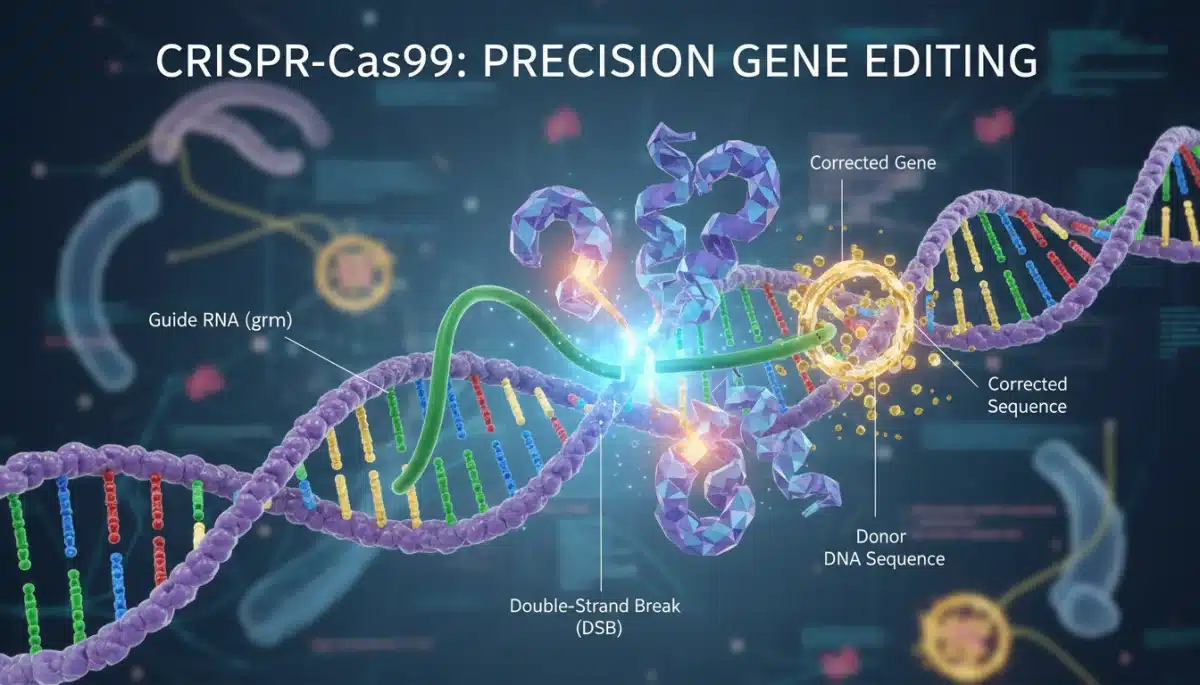
CRISPR-Cas9, and other gene-editing technologies, represent a monumental leap forward in our ability to directly address the root causes of genetic diseases. By 2026, these tools are transitioning from experimental research to approved therapeutic applications, offering curative potential for previously untreatable conditions within US healthcare.
CRISPR allows scientists to precisely cut and modify DNA sequences, effectively correcting genetic mutations that cause disease. While initially focused on single-gene disorders, the scope of CRISPR is rapidly expanding to more complex conditions. The ethical considerations are significant, but the therapeutic promise is immense, leading to rigorous regulatory frameworks.
Expanding the Horizons of Gene Therapy
The application of CRISPR-based gene editing is diverse, targeting a range of diseases by either repairing faulty genes or introducing beneficial genetic material. These therapies promise not just symptom management but genuine cures, altering the very fabric of how we approach inherited disorders.
- Sickle Cell Disease and Beta-Thalassemia: Clinical trials are showing promising results in correcting the genetic defects responsible for these debilitating blood disorders.
- Cystic Fibrosis: Research is ongoing to use CRISPR to repair the CFTR gene mutation, potentially restoring normal lung function.
- Certain Cancers: Gene editing is being explored to enhance the immune system’s ability to fight cancer, for example, by modifying T-cells for CAR T-cell therapy.
The development and deployment of CRISPR therapies require sophisticated infrastructure and highly specialized medical teams. However, as these technologies mature and become more accessible, they are set to redefine the treatment landscape for a multitude of genetic conditions, offering new hope to millions of patients. This marks a profound shift towards truly curative personalized medicine.
Genomic Innovation 3: AI-Powered Genomic Data Analysis and Drug Discovery
The sheer volume of genomic data generated today is staggering, far exceeding human capacity for analysis. This is where Artificial Intelligence (AI) and machine learning (ML) become indispensable. By 2026, AI-powered genomic data analysis is not just assisting but actively driving personalized medicine and drug discovery within the US healthcare system.
AI algorithms can sift through vast datasets of genomic information, clinical records, and research findings to identify subtle patterns, predict disease trajectories, and even design novel therapeutic compounds. This accelerates the pace of discovery and helps tailor treatments to individual patients based on their unique genetic profiles and predicted responses.
Transforming Research and Clinical Practice with AI
The integration of AI into genomic research and clinical practice is creating a synergistic environment where data-driven insights lead directly to improved patient care. This collaboration is streamlining processes that traditionally took years, making personalized treatments a reality much faster.
- Accelerated Drug Discovery: AI can rapidly screen potential drug candidates, predict their efficacy and toxicity, and identify new targets for therapeutic intervention.
- Personalized Treatment Regimens: AI analyzes a patient’s genomic data, medical history, and lifestyle to recommend the most effective treatment plan, minimizing trial-and-error.
- Disease Risk Prediction: Machine learning models can identify individuals at high risk for certain diseases years in advance, enabling proactive preventative strategies.
The power of AI lies in its ability to extract meaningful insights from complex genomic information, transforming raw data into actionable knowledge. This integration is not only making personalized medicine more efficient but also more effective, paving the way for a future where every treatment is uniquely designed for the individual.
Ethical Considerations and Accessibility in Genomic Healthcare
While the promise of personalized medicine through genomic healthcare innovations is immense, it also brings significant ethical considerations and challenges related to accessibility. Ensuring that these advanced therapies are available to all, regardless of socioeconomic status, is a critical hurdle for the US healthcare system to overcome by 2026.
The cost of genomic sequencing, gene therapies, and AI-driven diagnostics can be substantial. Without robust policies and insurance coverage, there is a risk that these life-changing treatments could exacerbate existing health disparities. Addressing these issues requires a multi-faceted approach involving policymakers, healthcare providers, and technology developers.
Navigating the Landscape of Equity and Privacy
Beyond cost, the ethical implications of handling sensitive genomic data are paramount. Protecting patient privacy and preventing genetic discrimination are crucial for maintaining public trust and encouraging participation in genomic medicine initiatives. Clear regulatory guidelines and secure data infrastructure are essential.
- Data Privacy and Security: Implementing stringent measures to protect individual genomic information from misuse or unauthorized access.
- Genetic Discrimination: Developing legal frameworks to prevent discrimination in employment or insurance based on genetic predispositions.
- Equitable Access: Creating strategies to ensure that all populations, including underserved communities, can benefit from personalized medicine.
The ethical framework surrounding personalized medicine must evolve as quickly as the science itself. Open dialogue, public education, and proactive policy-making are vital to harness the full potential of genomic innovations while upholding societal values and ensuring equitable access to these transformative healthcare advancements.
The Impact on US Healthcare Infrastructure and Training
The integration of advanced genomic healthcare innovations by 2026 will necessitate significant adaptations within the existing US healthcare infrastructure and a substantial investment in workforce training. Healthcare systems must be prepared to handle vast amounts of genomic data, interpret complex genetic reports, and deliver highly specialized therapies.
This transformation requires more than just new technologies; it demands a re-imagining of clinical workflows, patient education strategies, and the roles of healthcare professionals. From primary care physicians to specialists, a foundational understanding of genomics will become increasingly essential for providing optimal patient care.
Preparing for a Genomic Future
To effectively implement personalized medicine, educational initiatives and infrastructural upgrades are critical. Training programs must be developed to equip the current and future healthcare workforce with the necessary skills and knowledge.
- Genomic Literacy for Clinicians: Mandatory training for doctors, nurses, and pharmacists on interpreting genomic data and applying it to clinical decisions.
- Specialized Genomic Counseling: Expanding the number of genetic counselors to help patients understand complex genetic information and make informed choices.
- Interoperable Data Systems: Developing secure and integrated electronic health record systems capable of handling and sharing genomic data across different providers.
The successful integration of personalized medicine hinges on a robust and adaptable healthcare infrastructure, supported by a highly skilled and knowledgeable workforce. Investing in these areas now will ensure that the US healthcare system is well-prepared to fully leverage the power of genomic innovations for the benefit of all patients.
Looking Ahead: The Promise of a Healthier Future
As we look towards 2026, the trajectory of personalized medicine in the US healthcare system is clear: it’s moving towards an era of unprecedented precision and individualization. The three genomic innovations discussed—advanced liquid biopsies, CRISPR-based gene editing, and AI-powered data analysis—are not isolated advancements but interconnected pillars supporting this transformative shift.
These technologies promise not only more effective treatments but also a proactive approach to health, focusing on prevention and early intervention tailored to each person’s unique genetic blueprint. The challenges of accessibility, ethics, and infrastructure are significant, but the potential rewards—a healthier, more resilient population—are well worth the effort.
The future of healthcare is intensely personal. With continued research, responsible implementation, and a commitment to equitable access, personalized medicine, driven by these groundbreaking genomic innovations, will fundamentally redefine what it means to receive medical care in the United States, ushering in an era of hope and healing tailored for every individual.
| Key Innovation | Impact on US Healthcare by 2026 |
|---|---|
| Advanced Liquid Biopsies | Revolutionizes early cancer detection, treatment monitoring, and resistance identification. |
| CRISPR-Based Gene Editing | Offers curative potential for genetic diseases by precisely correcting faulty DNA. |
| AI-Powered Genomic Analysis | Accelerates drug discovery and tailors treatment plans by interpreting vast genomic data. |
| Ethical & Access Challenges | Ensuring equitable access and protecting genomic data privacy are critical for widespread adoption. |
Frequently Asked Questions About Personalized Medicine in 2026
Personalized medicine tailors medical treatment to an individual’s unique genetic makeup, lifestyle, and environment. By 2026, it’s crucial because it enables more effective, targeted therapies and preventative strategies, moving away from generalized approaches and improving patient outcomes significantly.
Liquid biopsies will revolutionize cancer care by 2026 through non-invasive early detection, real-time monitoring of treatment response, and identification of resistance mutations. This allows for more precise and timely adjustments to therapy, leading to better prognoses and reduced need for invasive procedures.
By 2026, CRISPR-based gene editing is moving into therapeutic applications, offering curative potential for genetic diseases like sickle cell anemia. It allows for precise correction of faulty genes, transforming the treatment landscape from symptom management to addressing the root cause of inherited disorders.
AI and machine learning are essential for processing the massive amounts of genomic data. By 2026, AI rapidly identifies patterns, predicts disease risks, and suggests optimal, personalized treatment plans. This acceleration in analysis drives drug discovery and refines therapeutic strategies, making personalized medicine more efficient.
Key challenges for personalized medicine by 2026 include the high cost of genomic technologies and therapies, which could create health disparities. Ensuring equitable access, protecting patient genomic data privacy, and preventing genetic discrimination are crucial ethical and practical hurdles that require ongoing policy development.
Conclusion
The journey towards a healthcare system defined by precision and individualization is well underway, with 2026 marking a pivotal point for personalized medicine in the United States. The convergence of advanced liquid biopsies, groundbreaking CRISPR gene editing, and powerful AI-driven genomic analysis is not merely an incremental improvement but a fundamental redefinition of medical care. While challenges related to ethics, accessibility, and infrastructure remain, the promise of these genomic healthcare innovations to deliver tailored, effective, and preventative treatments offers an incredibly optimistic outlook for the future of health and wellness across the nation.
