Wearable Biosensors: CGM Innovations for 2026 and Beyond
Anúncios
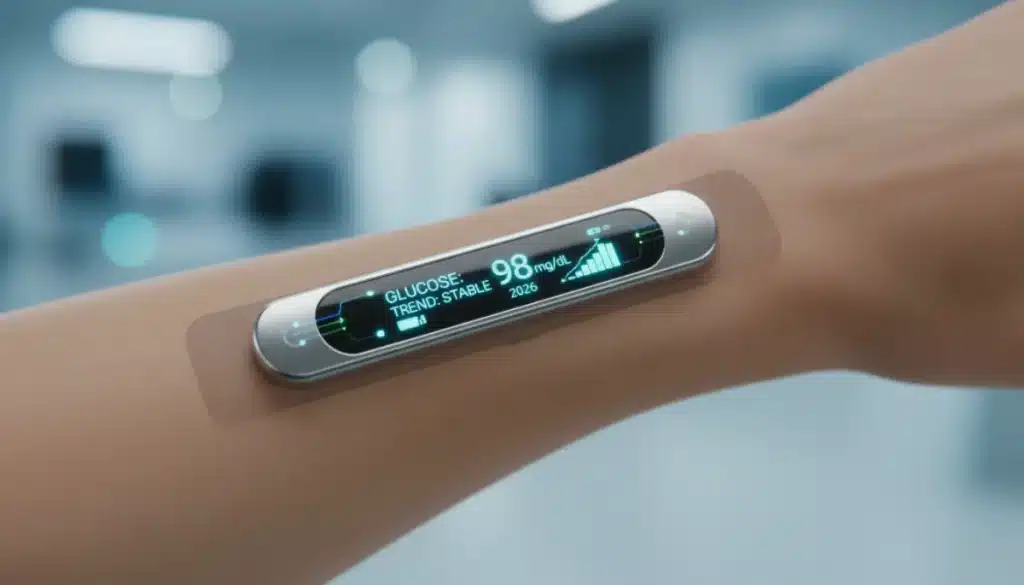
Wearable biosensors for continuous glucose monitoring (CGM) are rapidly evolving, promising revolutionary advancements in diabetes management and personalized health insights for 2026 and beyond.
Imagine a future where managing diabetes is less about painful finger pricks and more about seamless, real-time data from a discreet device on your skin. This isn’t a distant dream; it’s the rapidly approaching reality of wearable biosensors: the latest innovations for continuous glucose monitoring in 2026 and beyond. These advancements are set to redefine how individuals track and manage their health, offering unprecedented insights and empowering proactive care.
Anúncios
The Evolution of Continuous Glucose Monitoring (CGM)
Continuous Glucose Monitoring (CGM) has already transformed diabetes care, moving from intermittent blood glucose checks to a continuous stream of data. However, the journey doesn’t end there. We are on the cusp of a new era, where CGM devices become even more integrated, accurate, and user-friendly, pushing the boundaries of what’s possible in health monitoring.
Early CGM systems, while groundbreaking, often involved invasive sensors that required calibration and had limited wear times. The focus was primarily on providing data, leaving much of the interpretation to the user or healthcare provider. As technology advanced, devices became smaller, more comfortable, and offered improved accuracy, making them accessible to a broader population.
From Invasive to Minimally Invasive
The initial iterations of CGM devices relied on tiny filaments inserted under the skin to measure glucose in interstitial fluid. While effective, the invasive nature could be a barrier for some users. The drive for greater comfort and ease of use has propelled research into less invasive and even non-invasive methods.
- Reduced Filament Size: Newer generations feature even thinner, more flexible filaments, minimizing discomfort.
- Improved Adhesives: Advanced skin-friendly adhesives ensure secure attachment without irritation, extending wear time.
- Enhanced Biocompatibility: Materials are being developed to reduce the body’s immune response, improving sensor longevity and accuracy.
The evolution of CGM is a testament to the relentless pursuit of better patient outcomes. Each iteration brings us closer to a future where glucose monitoring is not just a medical necessity but an invisible, integrated part of daily life, providing actionable insights without disruption.
Looking ahead to 2026, we anticipate further strides in device miniaturization and material science, making CGM an even more seamless experience. These foundational improvements pave the way for more sophisticated functionalities and broader applications beyond traditional diabetes management.
Next-Generation Sensor Technologies and Materials
The heart of any wearable biosensor lies in its sensor technology and the materials it employs. For continuous glucose monitoring, researchers are exploring novel approaches that promise enhanced accuracy, longer wear times, and significantly less invasiveness. These innovations are critical for widespread adoption and improved patient compliance.
Current CGM devices primarily use enzymatic electrochemical sensors. While effective, they have limitations in terms of stability and potential for interference. The next wave of biosensors is looking beyond these traditional methods, integrating nanotechnology and advanced material science.
Anúncios
Nanotechnology in Glucose Sensing
Nanomaterials offer unique properties that can revolutionize glucose detection. Their high surface-to-volume ratio and quantum effects allow for highly sensitive and selective detection of glucose molecules, even at very low concentrations.
- Quantum Dots: Used in optical sensors for highly sensitive glucose detection based on fluorescence changes.
- Carbon Nanotubes/Graphene: Offer excellent electrical conductivity and biocompatibility, ideal for electrochemical sensors with enhanced performance.
- Nanoparticle-Enhanced Enzymes: Stabilize enzymes and improve their catalytic activity, leading to more robust and long-lasting sensors.
These nanoscale components are enabling the creation of sensors that are not only more precise but also incredibly small, allowing for more discreet and comfortable wearable designs. The integration of these materials is crucial for developing sensors that can withstand the body’s environment for extended periods without degradation.
Advanced Biocompatible Polymers
Beyond the sensing element, the materials that interface with the skin and bodily fluids are equally important. New biocompatible polymers are being developed to minimize inflammation, prevent biofouling, and ensure long-term sensor stability.
These advanced polymers can be engineered to release anti-inflammatory agents or to have surfaces that resist protein adsorption, thereby extending the lifespan and accuracy of the sensor in vivo. The goal is to create a seamless interface between the device and the body, reducing the need for frequent replacements.
The convergence of nanotechnology and advanced materials is accelerating the development of highly sophisticated and patient-friendly CGM devices. These breakthroughs are not just incremental improvements; they represent a fundamental shift in how we approach continuous glucose monitoring, promising a future of unparalleled accuracy and comfort.
Non-Invasive and Minimally Invasive Approaches
The holy grail of continuous glucose monitoring is a truly non-invasive method that eliminates the need for any skin penetration. While fully non-invasive solutions are still under intensive research, significant progress is being made in minimally invasive technologies that offer greater comfort and convenience than ever before. This quest for less intrusive monitoring is driven by the desire to improve user experience and encourage wider adoption, especially among those hesitant about traditional methods.
The current standard of CGM involves a small sensor wire inserted into the subcutaneous tissue. While generally well-tolerated, the aspiration for a completely pain-free and discreet solution remains a primary focus for innovators. Future devices aim to provide accurate glucose readings without the user even noticing the monitoring process.
Optical Glucose Monitoring
One of the most promising avenues for non-invasive glucose monitoring is optical technology. This involves using light to detect changes in glucose concentration within the body. Different optical techniques are being explored, each with its own advantages and challenges.
- Near-Infrared Spectroscopy (NIRS): Measures the absorption of specific wavelengths of light by glucose molecules in the tissue.
- Raman Spectroscopy: Detects vibrational and rotational modes of molecules, providing a unique spectral fingerprint for glucose.
- Photoacoustic Spectroscopy: Combines light and sound to generate signals proportional to glucose concentration, potentially offering deeper tissue penetration.
These optical methods aim to provide continuous, real-time glucose data by simply shining light through the skin, eliminating the need for any needles. While calibration and interference from other skin components remain challenges, advancements in signal processing and sensor miniaturization are bringing these technologies closer to commercial viability.
Microneedle Technology for Painless Sampling
For those applications where a very slight penetration is acceptable for enhanced accuracy, microneedle technology offers a revolutionary approach. These arrays of tiny needles are designed to be so small that they do not reach nerve endings, making their insertion virtually painless.
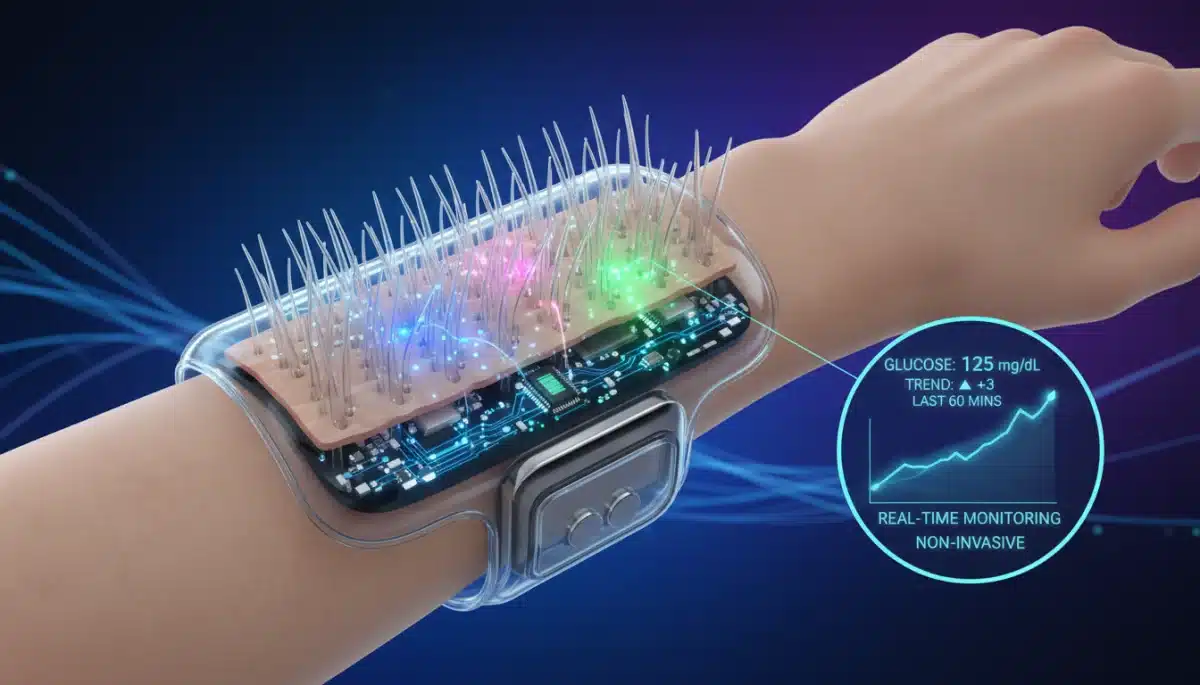
Microneedle patches can either extract tiny samples of interstitial fluid for analysis or incorporate electrochemical sensors directly into the microneedles. This allows for glucose measurement with minimal discomfort and risk of infection. The development of biodegradable microneedles further enhances safety and ease of use.
The push towards non-invasive and minimally invasive glucose monitoring is not just about comfort; it’s about making diabetes management more accessible, less burdensome, and ultimately, more effective for millions worldwide. These technological leaps are set to redefine the patient experience by 2026 and beyond.
Integration with Smart Devices and AI
The true power of next-generation wearable biosensors for continuous glucose monitoring extends far beyond mere data collection. The seamless integration with smart devices and the application of artificial intelligence (AI) are transforming raw glucose readings into actionable health insights. This convergence creates a personalized health ecosystem that empowers individuals to manage their diabetes proactively and intelligently.
Modern CGM devices are already capable of transmitting data wirelessly to smartphones and smartwatches. However, the future holds an even deeper level of integration, where these devices become central hubs for comprehensive health management, moving beyond simple data display to sophisticated analysis and predictive capabilities.
Real-Time Data Analysis and Personalized Alerts
With data constantly streaming from wearable biosensors, smart devices can perform real-time analysis, identifying trends and patterns that might otherwise go unnoticed. This immediate feedback loop is crucial for preventing dangerous glucose fluctuations.
- Predictive Algorithms: AI models analyze current and historical data to predict future glucose levels, allowing users to take preventative action.
- Personalized Alerts: Instead of generic alarms, systems will provide highly personalized notifications based on individual glycemic responses, activity levels, and dietary habits.
- Automated Insulin Delivery Integration: Closed-loop systems, or artificial pancreases, combine CGM data with insulin pump delivery, continuously adjusting insulin doses for optimal control.
These intelligent systems are designed to reduce the mental burden of diabetes management, allowing individuals to live more freely while maintaining tighter glycemic control. The ability of AI to learn from individual data patterns means that these systems become more effective and personalized over time.
AI for Predictive Health and Lifestyle Coaching
Beyond immediate glucose management, AI-powered platforms will leverage CGM data to offer holistic health and lifestyle coaching. By correlating glucose levels with diet, exercise, sleep patterns, and stress, these systems can provide tailored recommendations.
Imagine an app that not only tells you your current glucose but also suggests what to eat for your next meal based on your recent activity and predicted insulin sensitivity, or advises on the optimal time for a workout to avoid hypoglycemia. This level of personalized guidance moves beyond reactive management to proactive health optimization.
The synergy between wearable biosensors, smart devices, and AI is creating a powerful tool for diabetes management. This integrated approach promises to deliver not just data, but genuine intelligence, enabling individuals to make informed decisions that significantly improve their health outcomes and quality of life.
Impact on Diabetes Management and Prevention
The advancements in wearable biosensors for continuous glucose monitoring are poised to have a profound impact on both the management of existing diabetes and the prevention of its onset. By providing unprecedented visibility into glucose dynamics, these technologies empower individuals and healthcare providers with the tools needed for more effective, personalized, and proactive care strategies.
For individuals living with diabetes, the benefits are immediate and tangible: reduced complications, improved quality of life, and a greater sense of control. For those at risk, CGM can serve as an early warning system, enabling interventions before the disease fully develops.
Enhanced Glycemic Control and Reduced Complications
Continuous, real-time glucose data allows for much tighter glycemic control than intermittent finger-prick tests. This consistency is critical in preventing both hyperglycemia (high blood sugar) and hypoglycemia (low blood sugar), which are major contributors to long-term diabetes complications.
- Reduced HbA1c Levels: Studies consistently show that CGM use leads to lower HbA1c, a key indicator of long-term glucose control.
- Fewer Hypoglycemic Events: Real-time alerts can warn users of impending low blood sugar, allowing them to take action and prevent severe episodes.
- Improved Time in Range (TIR): CGM optimizes the time individuals spend within their target glucose range, significantly impacting overall health.
The ability to observe the immediate effects of food, exercise, and medication on glucose levels provides invaluable feedback, enabling individuals to fine-tune their management strategies and achieve better health outcomes. This granular data transforms diabetes management from a guessing game into a data-driven science.
Early Detection and Lifestyle Interventions
Beyond managing established diabetes, wearable biosensors hold immense potential for prevention. By monitoring glucose trends in individuals with prediabetes or those at high risk, these devices can identify early signs of glucose dysregulation.
This early detection can trigger timely lifestyle interventions, such as dietary changes and increased physical activity, which have been proven to delay or even prevent the progression to type 2 diabetes. The visual feedback from a CGM can be a powerful motivator for behavioral change, making the invisible impact of diet and exercise on glucose levels immediately apparent.
The widespread adoption of advanced wearable biosensors for CGM promises a future where diabetes is not just better managed, but also more effectively prevented. This shift towards proactive health management represents a significant step forward in tackling one of the world’s most prevalent chronic diseases.
Challenges and Future Outlook for Wearable Biosensors
While the future of wearable biosensors for continuous glucose monitoring is incredibly promising, several challenges must be addressed to unlock their full potential. These include issues related to accuracy, cost, accessibility, and data security. Overcoming these hurdles will be crucial for widespread adoption and equitable access to these transformative technologies.
Innovation rarely comes without obstacles, and the field of wearable biosensors is no exception. Researchers and developers are actively working to refine existing technologies and explore new paradigms to make these devices even more robust and reliable.
Accuracy and Calibration Issues
Despite significant advancements, maintaining consistent accuracy in diverse physiological conditions remains a challenge for some CGM devices. Factors such as sensor drift, interference from other substances in the body, and individual physiological variations can affect readings.
- Enhanced Calibration Algorithms: AI and machine learning are being used to develop more sophisticated algorithms that can adapt to individual physiology and improve accuracy over time.
- Multi-Sensor Fusion: Combining data from different types of sensors (e.g., optical and electrochemical) could provide more robust and accurate glucose measurements.
- Standardized Testing Protocols: Developing more rigorous and standardized testing methods will ensure that devices meet high accuracy benchmarks across different user groups.
The goal is to achieve accuracy levels comparable to, or even surpassing, traditional blood glucose meters, without the need for frequent user calibration. This will build greater trust in the technology and reduce the burden on users.
Cost, Accessibility, and Data Security
The cost of advanced wearable biosensors and associated data plans can be a significant barrier for many. Ensuring these life-changing technologies are accessible to all who need them is a critical ethical and practical consideration. Furthermore, the sensitive nature of health data necessitates robust security measures.
Efforts are underway to drive down manufacturing costs and explore innovative reimbursement models. Governments and healthcare systems are recognizing the long-term cost savings associated with improved diabetes management and prevention, which may lead to broader coverage. On the data front, developers are implementing advanced encryption and compliance with privacy regulations (like HIPAA in the US) to protect user information.
The future outlook for wearable biosensors in CGM is bright, with continuous innovation addressing current limitations. As technology matures, costs decrease, and regulatory frameworks adapt, these devices are set to become an indispensable part of personalized healthcare, extending their reach and impact far beyond current expectations.
The Future Beyond 2026: Personalized Health Ecosystems
Looking beyond 2026, the trajectory of wearable biosensors for continuous glucose monitoring points towards the creation of truly personalized health ecosystems. These ecosystems will integrate CGM data with a multitude of other physiological metrics, environmental factors, and individual genetic information, offering an unprecedented, holistic view of an individual’s health. This represents a paradigm shift from reactive treatment to proactive, predictive, and highly personalized health management.
The current focus on glucose is just the beginning. The next frontier involves combining glucose monitoring with a broader spectrum of biomarkers, creating a comprehensive digital twin of an individual’s physiology. This will allow for highly nuanced and anticipatory health interventions.
Multi-Biomarker Monitoring
Future wearable biosensors will likely move beyond single-analyte detection to simultaneously monitor multiple biomarkers. Imagine a single patch that tracks not only glucose but also:
- Lactate Levels: Indicative of metabolic stress and exercise intensity.
- Ketone Bodies: Important for individuals on ketogenic diets or managing type 1 diabetes.
- Electrolytes: Crucial for hydration status and kidney function.
- Stress Hormones: Providing insights into mental and physical stress responses.
This multi-biomarker approach will provide a much richer dataset, enabling AI algorithms to identify complex interdependencies and offer more sophisticated health recommendations. For example, a sudden increase in stress hormones coupled with a glucose spike could trigger an alert suggesting stress-reduction techniques.
Integration with Genomics and Microbiome Data
The ultimate personalized health ecosystem will integrate real-time physiological data from biosensors with an individual’s unique genetic profile and microbiome composition. This level of integration will allow for truly bespoke health strategies.
Understanding how an individual’s genes influence their response to diet and exercise, or how their gut microbiome impacts glucose metabolism, will unlock entirely new avenues for personalized nutrition, exercise prescriptions, and even targeted therapeutic interventions. Wearable biosensors will act as the crucial real-time feedback mechanism within this complex data landscape.
The vision for beyond 2026 is a health landscape where wearable biosensors are fundamental to a dynamic, self-optimizing health system. This ecosystem will continuously learn from an individual’s data, offering intelligent, anticipatory guidance to maintain optimal health, prevent disease, and enhance overall well-being in ways we are only just beginning to imagine.
| Key Innovation | Brief Description |
|---|---|
| Next-Gen Sensors | Utilizing nanotechnology and advanced materials for enhanced accuracy and stability in glucose detection. |
| Non/Minimally Invasive | Developing optical methods and microneedle tech for pain-free and discreet glucose monitoring. |
| AI & Smart Integration | Seamless data analysis, predictive alerts, and personalized coaching via smart devices. |
| Personalized Ecosystems | Future integration with multi-biomarker, genomics, and microbiome data for holistic health. |
Frequently Asked Questions About Wearable Biosensors for CGM
Next-generation wearable biosensors offer enhanced accuracy, greater comfort through less invasive designs, real-time data integration with smart devices, and AI-powered insights. These advancements lead to improved glycemic control, reduced complications, and a more personalized approach to diabetes management.
Non-invasive CGM devices are being developed using optical technologies like near-infrared or Raman spectroscopy, which use light to detect glucose levels through the skin without any needles. Microneedle technology offers a minimally invasive, virtually painless alternative by sampling interstitial fluid.
Absolutely. AI algorithms analyze continuous glucose data alongside lifestyle factors to predict glucose trends, offer personalized dietary and exercise recommendations, and even integrate with automated insulin delivery systems. This creates a highly customized and proactive management strategy for each individual.
Key challenges include ensuring consistent accuracy across diverse users, reducing the cost of devices and consumables to improve accessibility, and implementing robust data security and privacy measures. Regulatory approval processes for novel technologies also play a significant role in their market entry.
By providing continuous glucose insights, biosensors can help identify early signs of glucose dysregulation in individuals with prediabetes or high risk. This early detection enables timely lifestyle interventions, such as diet and exercise modifications, which can significantly delay or prevent the progression to type 2 diabetes.
Conclusion
The rapid advancements in wearable biosensors for continuous glucose monitoring are poised to revolutionize diabetes care and personalized health management. From increasingly accurate and less invasive sensor technologies to seamless integration with AI-powered smart devices, the landscape of glucose monitoring is evolving at an unprecedented pace. These innovations promise a future where individuals with diabetes can achieve tighter glycemic control with less burden, and those at risk can engage in proactive prevention strategies. While challenges in cost, accessibility, and accuracy remain, the relentless drive for innovation ensures that by 2026 and beyond, wearable biosensors will be indispensable tools in creating more intelligent, personalized, and effective health ecosystems for everyone.
