2-Minute Rule for Daily Chores: Tidy Home, Minimal Effort

Anúncios
The 2-Minute Rule for daily chores is a simple yet powerful strategy to tackle small tasks immediately, preventing clutter and maintaining a consistently tidy living space with minimal effort.
Anúncios
Are you constantly battling clutter and feeling overwhelmed by the thought of tackling household chores? The 2-Minute Rule for daily chores offers a remarkably simple yet profoundly effective solution to transform your approach to tidiness, allowing you to maintain a clean and organized home with minimal effort. This straightforward principle is not just a hack; it’s a paradigm shift in how we perceive and execute small tasks, ultimately leading to a more serene and functional living environment.
Understanding the Core Principle of the 2-Minute Rule
The 2-Minute Rule, popularized by productivity expert David Allen in his book “Getting Things Done,” is elegantly simple: if a task takes less than two minutes to complete, do it immediately. This principle, while initially designed for professional productivity, translates seamlessly into the realm of household chores, offering a powerful antidote to procrastination and accumulating mess.
It’s about breaking down larger, daunting tasks into smaller, manageable actions. By addressing these quick tasks as they arise, you prevent them from snowballing into overwhelming projects that demand significant time and energy. This proactive approach fosters a sense of control and reduces the mental load associated with an untidy home.
The Psychology Behind Immediate Action
Our brains are wired to seek efficiency, but often, the perceived effort of starting a task outweighs the actual effort of completing it. The 2-Minute Rule bypasses this mental hurdle by setting a low bar for action. Knowing a task will take only two minutes makes it less intimidating and more likely to be done.
- Overcoming Procrastination: The rule minimizes the decision-making process, making it easier to start.
- Building Momentum: Completing small tasks creates a sense of accomplishment, encouraging further action.
- Reducing Mental Clutter: Each completed task removes an item from your mental to-do list, freeing up cognitive resources.
By consistently applying this rule, you train your brain to act on small tasks rather than deferring them, which is crucial for maintaining a perpetually tidy space. The cumulative effect of these small, immediate actions is a home that rarely feels truly messy.
In essence, the 2-Minute Rule is a behavioral hack that leverages our natural inclination towards ease. It transforms the daunting prospect of “cleaning the house” into a series of tiny, almost effortless decisions, each contributing to a more organized and peaceful environment. This foundational understanding is key to unlocking its full potential in your daily routine.
Identifying 2-Minute Chores: What Qualifies?
The beauty of the 2-Minute Rule lies in its broad applicability. Once you start looking, you’ll find countless tasks around your home that fit the criteria. The key is to shift your perspective from viewing these as “chores” to seeing them as quick, almost automatic adjustments that keep your space in order.
Anúncios
It’s not about deep cleaning; it’s about maintenance. Think about the small things that, if left undone, contribute to a feeling of disarray. These are your prime candidates for the 2-Minute Rule.
Common Examples of Quick Tasks
Many everyday actions fall perfectly within the two-minute window. These are the tasks that often get pushed aside, only to accumulate and create larger problems later. Incorporating them into your immediate routine can significantly impact your home’s overall tidiness.
- Kitchen: Wiping down the counter after cooking, loading a dirty dish into the dishwasher, putting away groceries immediately after unpacking.
- Living Room: Fluffing pillows on the sofa, folding a throw blanket, returning a book to its shelf, tidying magazines.
- Bedroom: Making the bed, hanging up clothes instead of leaving them on a chair, putting away jewelry.
- Bathroom: Wiping down the sink after use, hanging up a towel, replacing a toilet paper roll.
- Entryway: Putting away shoes, hanging up a coat, sorting mail as soon as it comes in.
The list is extensive and personal to your habits. The goal is to develop an awareness of these small opportunities throughout your day and act on them without hesitation. This proactive mindset is what truly makes the 2-Minute Rule revolutionary.
By consciously identifying and executing these quick chores, you prevent the build-up of small messes that lead to larger, more time-consuming cleaning sessions. This continuous, low-effort maintenance is far less taxing than infrequent, intensive cleaning sprees, leading to a consistently more enjoyable home.
Implementing the Rule: Making it a Habit
Adopting the 2-Minute Rule isn’t just about knowing what to do; it’s about integrating it into your daily routine until it becomes second nature. Like any habit, it requires consistent practice and a conscious effort to override old patterns of procrastination. The initial push might feel challenging, but the long-term benefits far outweigh the temporary discomfort.
Start small and be patient with yourself. You’re essentially retraining your brain to respond differently to minor tasks. The goal is to make immediate action the default, rather than the exception.
Strategies for Successful Integration
To successfully embed the 2-Minute Rule into your life, consider these practical strategies. They are designed to minimize resistance and maximize adherence, turning a conscious effort into an automatic response over time.
- Start Small: Pick one or two areas where you’ll focus your 2-minute efforts first, like the kitchen counter or your bedside table.
- Visual Reminders: Place sticky notes or visual cues in areas where tasks often accumulate.
- Pairing with Existing Habits: Link a 2-minute chore to an established routine. For example, while waiting for your coffee to brew, wipe down the kitchen counter.
- Reward System (Optional): Acknowledge your small victories. The sense of accomplishment can be a powerful motivator.
Consistency is more important than perfection. Don’t get discouraged if you miss a few tasks. The idea is to build a habit, and habits are formed through repetition, not flawless execution. Each time you apply the rule, you reinforce the neural pathways that support immediate action.
Making the 2-Minute Rule a habit transforms not just your home, but your relationship with chores. It shifts from a reactive burden to a proactive, almost effortless part of your day, contributing to a consistently orderly environment.
Beyond Two Minutes: When to Break the Rule
While the 2-Minute Rule is incredibly powerful for maintaining daily tidiness, it’s essential to understand its limitations and when to judiciously “break” or adapt it. Not every task fits neatly into the two-minute window, and attempting to force larger tasks into this framework can lead to frustration and burnout.
The rule is designed for quick, immediate actions, not for deep cleaning or complex organizational projects. Recognizing this distinction is crucial for sustainable home management.
Distinguishing Quick Fixes from Larger Projects
It’s vital to differentiate between a quick tidying task and a more involved cleaning or organizing project. Misapplying the 2-Minute Rule to tasks that clearly exceed its scope can undermine its effectiveness and leave you feeling defeated.
- Quick Fixes (2-Minute Rule): Wiping a spill, putting away a single item, making the bed.
- Intermediate Tasks (5-15 minutes): Vacuuming a single room, cleaning a toilet, organizing a small drawer. These might be scheduled for specific times.
- Larger Projects (30+ minutes): Deep cleaning the bathroom, decluttering a closet, reorganizing the pantry. These require dedicated time blocks.
For tasks that exceed two minutes but are still relatively short, consider creating a “5-minute rule” or a “15-minute rule” for specific daily or weekly slots. The core principle of tackling tasks before they grow remains, but the time allowance adjusts to the task’s complexity.
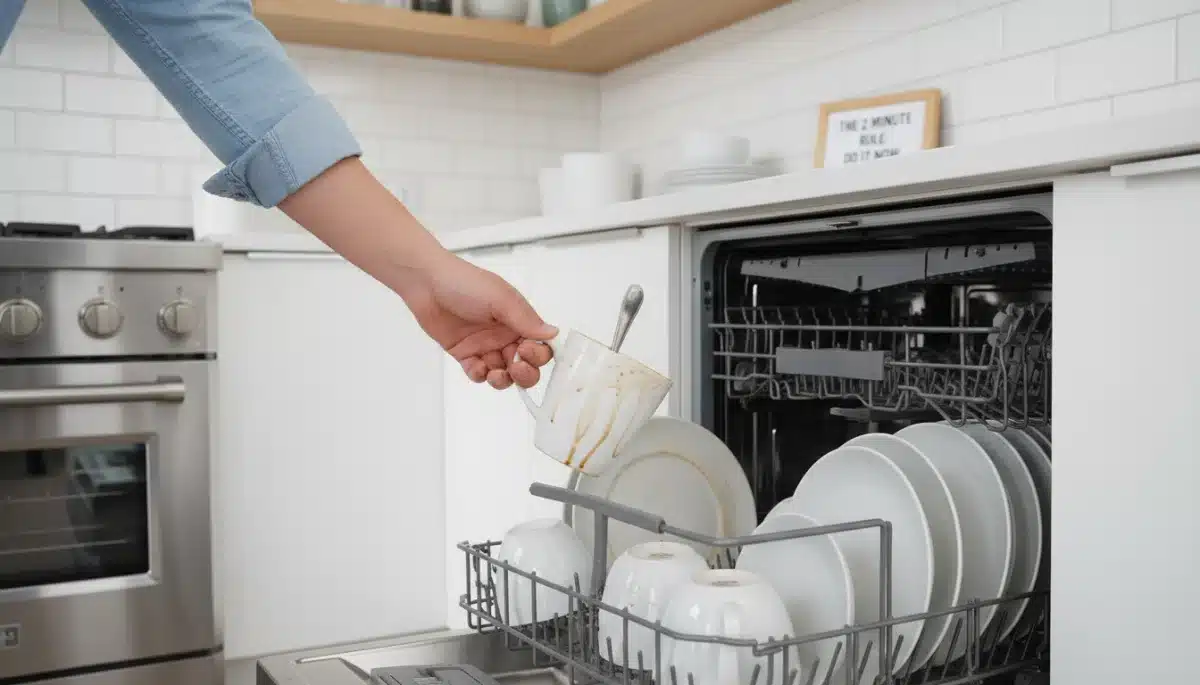
The 2-Minute Rule is a tool for preventing accumulation, not for comprehensive overhaul. Use it strategically for its intended purpose, and integrate other time management techniques for larger chores. This balanced approach ensures your home stays tidy without overwhelming your schedule.
The Long-Term Impact on Your Home and Well-being
The consistent application of the 2-Minute Rule extends far beyond mere tidiness; it profoundly impacts your living environment and, by extension, your mental and emotional well-being. A perpetually tidy space fosters a sense of calm, reduces stress, and enhances overall productivity and focus.
The cumulative effect of these small, immediate actions creates an environment that supports relaxation and clarity, rather than adding to your daily stressors. It’s an investment in your peace of mind.
Creating a Serene and Functional Environment
A home where clutter is consistently managed feels more spacious, inviting, and functional. The mental energy saved from not having to constantly deal with overwhelming messes can be redirected towards more fulfilling activities, leading to a higher quality of life.
- Reduced Stress: A clean space often translates to a clear mind, lessening feelings of anxiety.
- Improved Focus: Fewer distractions from clutter allow for better concentration on tasks, work, or hobbies.
- Enhanced Hospitality: A tidy home is always ready for guests, reducing last-minute scramble.
- Increased Productivity: Less time spent searching for items or cleaning up means more time for meaningful pursuits.
Moreover, the discipline cultivated through the 2-Minute Rule often spills over into other areas of life, encouraging a more proactive and organized approach to personal and professional responsibilities. It’s a small habit with a ripple effect on your entire existence.
Ultimately, the 2-Minute Rule isn’t just about keeping your space tidy; it’s about cultivating a lifestyle that prioritizes order, reduces mental load, and creates a more harmonious living experience. The long-term benefits are a testament to the power of small, consistent actions.
Tips for Sustaining the 2-Minute Rule in a Busy Life
Maintaining any new habit, especially amidst a busy schedule, can be challenging. The 2-Minute Rule, while simple, still requires commitment and adaptation to fit the unique rhythm of your daily life. The key is to find strategies that make it effortless to stick to, even when time is scarce and energy is low.
Don’t view it as another item on your to-do list, but rather as an integral part of your existing flow. This mindset shift is crucial for long-term adherence.
Practical Strategies for Busy Individuals
Integrating the 2-Minute Rule effectively into a demanding routine involves smart planning and an understanding of your own habits. These tips are designed to make the rule work for you, not against you.
- Involve the Household: Teach family members the rule. Shared responsibility lightens the load and reinforces the habit for everyone.
- Be Flexible: Some days will be busier than others. Don’t let one missed task derail your progress; simply pick up where you left off.
- One-Touch Rule: Try to handle items only once. If you pick something up, put it where it belongs immediately.
- Designated Homes: Ensure every item in your home has a designated place. This makes putting things away a no-brainer.
- End-of-Day Power Tidy: Dedicate a quick 5-10 minutes before bed for a final sweep of common areas, catching any missed 2-minute tasks.
Remember, the goal is not to achieve perfection but to foster consistent progress. By making small, immediate actions a regular part of your day, you prevent clutter from accumulating, ensuring your home remains a sanctuary rather than a source of stress, even when life gets hectic.
By implementing these sustaining tips, the 2-Minute Rule transforms from a temporary hack into a permanent, effortless habit that seamlessly integrates into even the busiest of lifestyles, ensuring a consistently tidy and peaceful home.
| Key Aspect | Brief Description |
|---|---|
| Core Principle | If a task takes less than two minutes, do it immediately to prevent accumulation. |
| Identifying Chores | Focus on small, daily tasks like wiping counters, putting away clothes, or tidying items. |
| Habit Formation | Integrate into daily routines, use visual cues, and pair with existing habits for consistency. |
| Long-Term Benefits | Reduces stress, improves focus, and creates a consistently serene and functional living space. |
Frequently Asked Questions About the 2-Minute Rule
The 2-Minute Rule was introduced by productivity guru David Allen in his best-selling book, “Getting Things Done.” While initially applied to professional tasks, its principles are highly effective for managing personal chores and maintaining an organized home environment. It’s a simple strategy to overcome procrastination by tackling quick tasks immediately.
By addressing small tasks as soon as they arise, the 2-Minute Rule prevents items from accumulating. A single dirty dish becomes a pile, a misplaced shirt becomes a heap. Acting immediately on these minor tasks stops the snowball effect, ensuring that your home remains consistently tidy without large, daunting clean-up sessions.
Absolutely! The 2-Minute Rule is highly versatile and extends beyond physical chores. For digital tasks, it means immediately replying to an email that takes less than two minutes, deleting spam, or organizing a file into its correct folder. This prevents digital clutter and keeps your online workspace efficient and organized.
The two-minute limit is a guideline, not a strict law. If a task takes three or four minutes but can still be done quickly without significant interruption, consider doing it. The core idea is to act on small tasks proactively. For longer tasks, schedule them or break them down into smaller, two-minute components if possible.
Lead by example and explain the benefits of a tidy home and less stress. Make it a game, especially with children, where quick tasks are celebrated. Assign specific “2-minute zones” or tasks to each family member. Consistency and positive reinforcement are key to encouraging everyone to adopt this simple yet effective habit.
Conclusion
The 2-Minute Rule is more than just a productivity hack; it’s a transformative philosophy for managing your home and enhancing your daily life. By committing to immediate action on small tasks, you unlock a powerful mechanism for preventing clutter, reducing stress, and fostering a consistently serene and organized living space. This simple shift in perspective and habit not only keeps your home tidy with minimal effort but also cultivates a proactive mindset that can positively impact every aspect of your life. Embrace the power of two minutes, and watch your environment, and your well-being, flourish.
