AI in Prescription Management: Reducing US Medication Errors by 10% in 2026

Anúncios
AI in prescription management is poised to revolutionize healthcare, significantly reducing medication errors by an anticipated 10% across the United States by 2026, thereby enhancing patient safety and optimizing healthcare delivery.
The landscape of healthcare is undergoing a profound transformation, with artificial intelligence (AI) emerging as a pivotal force. Specifically, the application of AI in prescription management is not just a theoretical concept but a tangible solution actively reshaping patient care. This innovative approach promises to drastically reduce medication errors, with projections indicating a remarkable 10% decrease across the United States by 2026. This shift represents a critical advancement in patient safety and operational efficiency, moving beyond traditional methods to embrace a smarter, more secure future in medication dispensing.
Anúncios
The medication error challenge in the US healthcare system
Medication errors represent a persistent and serious threat within the United States healthcare system, impacting millions of patients annually. These errors can range from incorrect dosages and drug-drug interactions to mislabeled prescriptions, leading to adverse drug events, prolonged hospital stays, and, in severe cases, fatalities. The human element, while indispensable, is also prone to fatigue, oversight, and the complexities of managing vast amounts of patient data and diverse pharmaceutical inventories.
The sheer volume of prescriptions processed daily, coupled with the intricate details of patient histories, allergies, and existing medications, creates a fertile ground for mistakes. Healthcare professionals, despite their dedication, operate under immense pressure, making it difficult to maintain flawless accuracy at all times. This systemic vulnerability underscores the urgent need for robust, error-proofing mechanisms that can supplement human vigilance and provide an additional layer of safety.
Understanding the scope of the problem
- Approximately 7,000 to 9,000 people die each year in the U.S. due to medication errors.
- Costs associated with medication errors exceed $40 billion annually.
- Errors occur at various stages, from prescribing to administration.
The financial and human costs associated with medication errors are staggering. Beyond the immediate health consequences for patients, there are significant economic burdens on the healthcare system, including increased treatment costs, legal expenses, and loss of public trust. Traditional safeguards, while important, often fall short in preventing all types of errors, particularly those stemming from complex interactions or data oversights. This critical gap highlights why innovative solutions are not just beneficial but essential for modern healthcare.
The ongoing challenge of medication errors emphasizes the necessity for a paradigm shift in how prescriptions are managed. Relying solely on human review, no matter how diligent, is no longer sufficient in an increasingly complex medical environment. This sets the stage for AI to play a transformative role, offering capabilities that far exceed human processing power in terms of speed, accuracy, and comprehensive data analysis.
How AI is transforming prescription accuracy
Artificial intelligence is introducing a new era of precision in prescription management, moving beyond manual checks to proactive error prevention. AI-powered systems can analyze vast datasets, including patient medical records, medication histories, allergies, and potential drug-drug interactions, with unprecedented speed and accuracy. This capability allows for real-time identification of potential issues that might otherwise go unnoticed by human practitioners, thereby significantly enhancing patient safety.
These smart systems utilize machine learning algorithms to learn from past data, continuously refining their ability to detect subtle patterns and predict potential errors. From the moment a prescription is entered into the system, AI begins its comprehensive review, flagging any discrepancies or risks. This includes cross-referencing with a patient’s existing medication regimen to prevent adverse interactions and ensuring correct dosages based on individual patient characteristics like age, weight, and kidney function.
Anúncios
Key AI applications in error reduction
- Drug-drug interaction checks: AI systems can instantly flag potentially harmful interactions between prescribed medications and other drugs a patient is taking.
- Dosage verification: Algorithms compare prescribed dosages against recommended guidelines and patient-specific factors to prevent over or under-dosing.
- Allergy alerts: AI cross-references prescription orders with a patient’s documented allergies, preventing severe allergic reactions.
- Patient data analysis: Systems analyze comprehensive patient data to identify risk factors for adverse drug events, offering personalized safety recommendations.
The integration of AI also extends to the dispensing phase, where technologies like robotic dispensing systems, guided by AI, ensure that the correct medication and dosage are prepared and labeled accurately. This automation minimizes human handling errors and increases overall efficiency. By providing an intelligent layer of oversight throughout the entire prescription process, AI systems not only catch errors but also contribute to a more streamlined and reliable workflow for healthcare providers.
Ultimately, AI’s role in transforming prescription accuracy lies in its ability to process, analyze, and flag potential issues at a scale and speed impossible for humans. This leads to a substantial reduction in the incidence of medication errors, fostering a safer environment for patients and empowering healthcare professionals with advanced decision-support tools. The shift towards AI-driven accuracy is not just an incremental improvement but a foundational change in how medication safety is managed.
Anticipated 10% reduction in medication errors by 2026
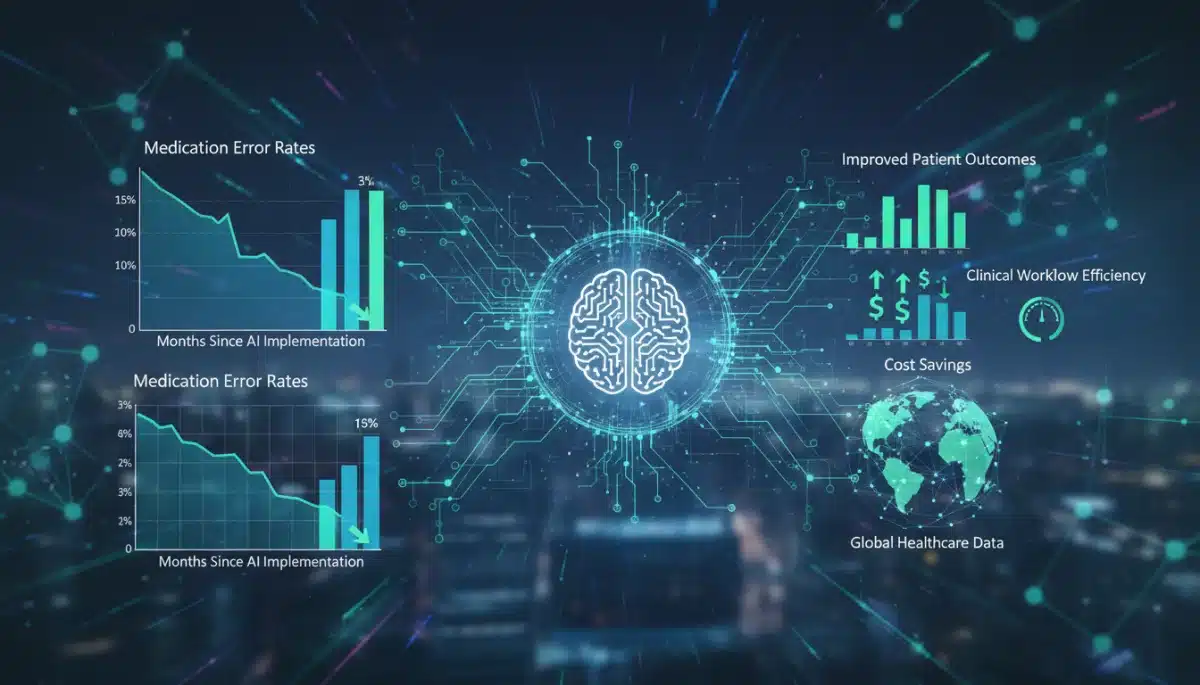
The projection of a 10% reduction in medication errors across the United States by 2026 is an ambitious yet achievable goal, driven largely by the accelerating adoption and sophistication of AI technologies in healthcare. This anticipated decrease reflects a growing understanding of AI’s potential to mitigate the complex factors contributing to these errors. The widespread implementation of AI-powered prescription management systems is expected to create a significant impact across diverse healthcare settings, from large hospital networks to community pharmacies.
This 10% reduction is not merely a statistical target; it represents thousands of averted adverse drug events, improved patient outcomes, and substantial cost savings for the healthcare system. The incremental adoption of AI tools, coupled with continuous refinement of algorithms through machine learning, will contribute to this cumulative effect. As healthcare providers become more familiar with these systems and integrate them seamlessly into their workflows, the benefits will multiply.
Factors driving this significant reduction
Several key factors underpin the optimistic projection for error reduction. One primary driver is the increasing availability of robust, user-friendly AI platforms designed specifically for pharmaceutical management. These platforms are becoming more accessible and affordable, encouraging broader adoption. Furthermore, the growing body of evidence demonstrating AI’s effectiveness in pilot programs and early implementations provides a strong incentive for healthcare organizations to invest in these technologies.
- Enhanced data integration: AI systems are increasingly capable of integrating data from disparate sources, creating a holistic patient profile that minimizes oversight.
- Predictive analytics: Advanced AI models can predict potential error scenarios based on historical data and patient demographics, allowing for proactive interventions.
- Real-time alerts: Instantaneous alerts for dangerous interactions or incorrect dosages empower healthcare professionals to make immediate corrections.
- Standardization of processes: AI helps standardize prescription workflows, reducing variability and the likelihood of human error.
Another crucial element is the collaborative effort between technology developers, healthcare providers, and regulatory bodies to ensure that AI solutions are not only effective but also safe and compliant. This multi-stakeholder approach helps build trust and facilitates the smooth integration of these advanced systems into clinical practice. The continuous feedback loops between users and developers further refine AI capabilities, making them even more adept at identifying and preventing errors.
The projected 10% reduction in medication errors by 2026 is a testament to the transformative power of AI in healthcare. It signifies a future where patient safety is significantly bolstered, and healthcare resources are optimized through intelligent, data-driven solutions. This milestone will mark a pivotal achievement in the ongoing effort to deliver safer and more efficient patient care across the nation.
Benefits beyond error reduction: efficiency and cost savings
While the primary focus of AI in prescription management is undoubtedly the reduction of medication errors, its benefits extend far beyond immediate patient safety. The implementation of intelligent systems also brings about substantial improvements in operational efficiency and significant cost savings for healthcare providers. By automating routine tasks, streamlining workflows, and optimizing resource allocation, AI allows healthcare professionals to dedicate more time to direct patient care and complex decision-making.
Consider the time saved by pharmacists and technicians who no longer need to manually cross-reference every prescription against extensive patient records and drug interaction databases. AI performs these checks instantaneously, freeing up valuable human resources. This efficiency translates into faster prescription processing, reduced waiting times for patients, and an overall more productive pharmacy or clinical environment. The ripple effect of these efficiencies can be felt throughout the entire healthcare ecosystem.
Streamlining operations and resource optimization
- Automated inventory management: AI can predict demand for specific medications, optimizing inventory levels and reducing waste.
- Faster prescription processing: Automated checks and verifications reduce the time required to dispense medications safely.
- Reduced administrative burden: AI handles many data entry and verification tasks, lessening the workload on staff.
- Improved decision support: Healthcare professionals receive timely, data-backed insights, enhancing their decision-making capabilities.
The financial implications of these efficiencies are considerable. Reducing medication errors directly lowers the costs associated with adverse drug events, extended hospital stays, and potential legal liabilities. Furthermore, optimized inventory management prevents overstocking or understocking of medications, minimizing financial losses due to expired drugs or missed sales. The ability of AI to predict demand patterns also ensures that essential medications are always available, improving patient access and continuity of care.
Moreover, the enhanced accuracy provided by AI systems contributes to better patient adherence to medication regimens, as fewer errors lead to greater trust and confidence in the healthcare system. This improved adherence can result in better health outcomes, reducing the need for further medical interventions and associated costs. Thus, the investment in AI for prescription management yields a multifaceted return, improving both the quality and economic viability of healthcare delivery.
Challenges and considerations for widespread AI adoption
Despite the undeniable promise of AI in prescription management, its widespread adoption across the United States healthcare system is not without its challenges. Integrating these sophisticated technologies into existing, often complex and legacy, IT infrastructures requires significant investment, technical expertise, and careful planning. The sheer scale of the U.S. healthcare landscape, with its diverse range of providers, from large hospital networks to independent pharmacies, presents a multifaceted integration puzzle.
One of the primary concerns revolves around data privacy and security. AI systems rely on access to vast amounts of sensitive patient data, making robust cybersecurity measures paramount. Ensuring compliance with regulations like HIPAA is critical, and any breach could have severe consequences for patients and healthcare organizations. Building and maintaining trust in these systems requires absolute transparency and stringent data protection protocols.
Addressing the hurdles to implementation
Overcoming these hurdles demands a concerted effort from all stakeholders. For successful implementation, healthcare organizations need to invest in not only the technology itself but also in training their staff to effectively utilize these new tools. User acceptance and proficiency are key to maximizing the benefits of AI. Furthermore, the ethical implications of AI in healthcare, such as algorithmic bias and accountability, must be carefully addressed to ensure equitable and fair outcomes for all patients.
- Data security and privacy: Implementing robust encryption, access controls, and compliance with regulations like HIPAA is essential.
- Interoperability issues: Ensuring AI systems can seamlessly integrate with diverse electronic health record (EHR) systems and other platforms.
- Cost of implementation: Initial investment in AI technology, infrastructure upgrades, and staff training can be substantial.
- Algorithmic bias: Developing AI models that are free from biases to ensure equitable care for all patient populations.
- Regulatory frameworks: Establishing clear guidelines and standards for the development and deployment of AI in medical settings.
Another significant challenge is the need for continuous validation and monitoring of AI algorithms. As medical knowledge evolves and new drugs enter the market, AI systems must be regularly updated and retrained to maintain their accuracy and relevance. This ongoing maintenance requires dedicated resources and expertise. Additionally, establishing clear regulatory frameworks for AI in healthcare is crucial to ensure safety, efficacy, and accountability.
While the challenges are considerable, they are not insurmountable. Through collaborative efforts, thoughtful policy-making, and a commitment to ethical AI development, the healthcare industry can navigate these complexities. The potential benefits of widespread AI adoption in prescription management, particularly in enhancing patient safety, provide a powerful incentive to overcome these obstacles and realize a more intelligent, error-free future.
The future outlook: AI’s expanding role in healthcare
The journey of AI in prescription management is just one facet of its broader, expanding role in healthcare. Looking beyond 2026, AI is poised to become an even more integral component of medical practice, influencing everything from diagnostics and personalized treatment plans to drug discovery and public health initiatives. The foundational success in reducing medication errors will serve as a powerful testament to AI’s capability to address complex problems and deliver tangible improvements in patient care.
As AI technologies mature, we can expect to see more sophisticated predictive models that anticipate health risks before they manifest, enabling truly preventive medicine. Imagine AI systems that not only manage prescriptions but also monitor patient adherence, analyze real-world outcomes, and provide personalized coaching to optimize health behaviors. This holistic approach will transform reactive care into proactive wellness management, empowering both patients and providers.
Innovations on the horizon
The integration of AI with other emerging technologies, such as wearable sensors and the Internet of Medical Things (IoMT), will further amplify its impact. Real-time data streams from these devices can feed into AI algorithms, providing continuous insights into a patient’s health status and immediate alerts for any deviations. This continuous monitoring can be particularly valuable for managing chronic conditions and ensuring medication effectiveness.
- Personalized medicine: AI will tailor drug regimens based on individual genetic profiles, lifestyle, and unique physiological responses.
- Drug discovery and development: Accelerating the identification of new drug candidates and optimizing clinical trials.
- Remote patient monitoring: AI analyzing data from wearables to provide proactive health interventions and medication adjustments.
- Clinical decision support: More advanced AI tools assisting physicians in complex diagnostic and treatment decisions.
Furthermore, AI will play a critical role in addressing healthcare disparities by making high-quality medical information and support more accessible. For instance, AI-powered virtual assistants could provide medication reminders and answer common patient questions, reducing the burden on healthcare facilities and improving health literacy. The scalability of AI solutions means they can reach underserved populations, democratizing access to advanced healthcare resources.
The future outlook for AI in healthcare is one of continuous innovation and integration. The lessons learned from implementing AI in prescription management will inform its application in other critical areas, paving the way for a healthcare system that is not only safer and more efficient but also profoundly intelligent and patient-centric. This evolution promises a healthier future for individuals and communities alike, driven by the relentless progress of artificial intelligence.
| Key Aspect | Description |
|---|---|
| Medication Error Reduction | AI systems are projected to reduce medication errors by 10% across the US by 2026, enhancing patient safety. |
| Enhanced Accuracy | AI analyzes vast datasets for drug interactions, dosages, and allergies, ensuring precise prescription management. |
| Operational Efficiency | Automation of tasks and optimized workflows lead to faster processing and reduced administrative burdens. |
| Challenges & Future | Challenges include data security and interoperability, but AI’s role is set to expand in personalized medicine and diagnostics. |
Frequently asked questions about AI in prescription management
AI in prescription management refers to the use of artificial intelligence technologies to automate, optimize, and enhance various stages of the prescription process, from ordering to dispensing. It leverages machine learning to analyze data, identify potential errors, and provide decision support to healthcare professionals.
AI achieves this by performing real-time checks for drug-drug interactions, dosage appropriateness, and patient allergies. It cross-references extensive databases and patient histories, flagging discrepancies that human oversight might miss, leading to a significant reduction in error rates.
No, AI is designed to augment, not replace, healthcare professionals. It acts as a powerful tool for decision support, automating routine checks and providing insights. This allows pharmacists and doctors to focus more on complex cases, patient counseling, and direct care, enhancing their capabilities.
Beyond error reduction, AI boosts operational efficiency by automating tasks, reducing administrative burden, and optimizing inventory. It also contributes to cost savings by preventing adverse events and improving resource allocation, leading to a more streamlined and effective healthcare system.
Key challenges include ensuring data privacy and security, achieving interoperability with existing systems, managing the high initial costs of implementation, addressing potential algorithmic bias, and establishing clear regulatory frameworks for AI in medical settings.
Conclusion: a new era of safety and efficiency
The advent of AI in prescription management marks a pivotal moment for healthcare in the United States. The ambitious yet achievable goal of reducing medication errors by 10% by 2026 underscores a profound shift towards a safer, more efficient, and more intelligent healthcare system. By leveraging the power of advanced algorithms and machine learning, AI systems are not only mitigating critical risks associated with human error but also unlocking unprecedented levels of operational efficiency and cost savings. While challenges related to data security, interoperability, and ethical considerations remain, the collaborative efforts of technologists, healthcare providers, and policymakers are steadily paving the way for broader adoption. The future promises an even more expansive role for AI, transforming healthcare into a proactive, personalized, and ultimately more humane experience for all.
