Human-Machine Collaboration: Boost US Workplace Productivity Now
Anúncios
Human-machine collaboration strategies are revolutionizing US workplaces, offering innovative ways to boost productivity by integrating AI and automation with human skills for enhanced efficiency and innovation.
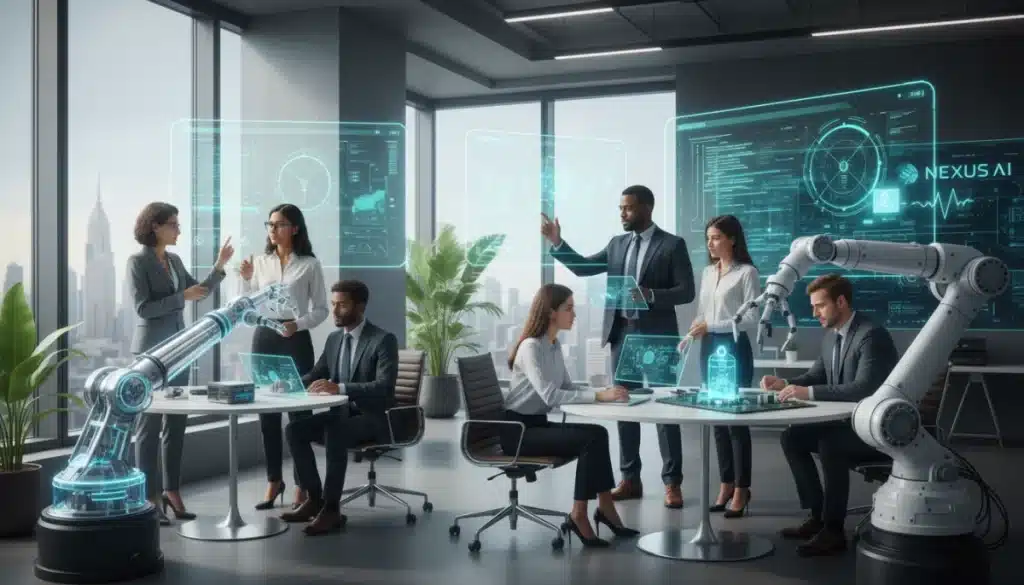
In the dynamic landscape of modern business, the synergy between human intellect and artificial intelligence is no longer a futuristic concept but a present-day imperative. Human-machine collaboration strategies are emerging as the cornerstone for enhancing productivity across US workplaces, offering unprecedented opportunities for growth and innovation. This exploration delves into seven innovative strategies designed to propel American businesses forward this year.
Anúncios
Understanding the Core of Human-Machine Collaboration
Human-machine collaboration, at its heart, is about leveraging the unique strengths of both humans and intelligent machines to achieve outcomes that neither could accomplish alone. It’s not about replacing human workers but augmenting their capabilities, freeing them from repetitive tasks, and empowering them to focus on higher-value activities requiring creativity, critical thinking, and emotional intelligence. This symbiotic relationship is crucial for businesses aiming to stay competitive in the rapidly evolving global market.
The concept extends beyond mere automation; it involves intelligent systems that learn, adapt, and interact with humans in meaningful ways. This interaction creates a feedback loop where machines provide data-driven insights and execute tasks with precision, while humans offer contextual understanding, ethical judgment, and strategic direction. The ultimate goal is to create a more efficient, innovative, and resilient workforce.
Defining the Synergy
The synergy in human-machine collaboration is multifaceted, encompassing various levels of interaction and integration. It demands a clear understanding of where human intuition and machine efficiency intersect to create optimal performance.
- Complementary Skills: Humans excel in creativity, problem-solving, and empathy, while machines offer speed, accuracy, and data processing power.
- Enhanced Decision-Making: AI can analyze vast datasets to present actionable insights, allowing human decision-makers to make more informed choices.
- Continuous Learning: Both humans and machines can learn from each other, leading to continuous improvement in processes and outcomes.
In essence, understanding this core principle sets the stage for implementing effective strategies that truly harness the potential of this powerful partnership. It’s about designing workflows where each entity contributes its best, leading to superior results and a more engaged workforce.
Strategy 1: Intelligent Automation of Repetitive Tasks
One of the most immediate and impactful applications of human-machine collaboration is the intelligent automation of repetitive and mundane tasks. By offloading these activities to AI and robotics, human employees are liberated to focus on more complex, creative, and strategic endeavors that truly require their cognitive abilities. This not only boosts overall productivity but also significantly enhances job satisfaction and reduces burnout.
Consider the myriad of administrative tasks in any given office: data entry, scheduling, report generation, and basic customer service inquiries. These are prime candidates for automation. Robotic Process Automation (RPA) bots can perform these tasks with unparalleled speed and accuracy, virtually eliminating human error and ensuring consistency. This allows human teams to redirect their energy towards innovation, client relationships, and strategic planning, areas where their unique skills are indispensable.
Implementing RPA for Efficiency
Implementing RPA effectively requires a systematic approach, identifying bottlenecks and areas where automation can yield the greatest returns. It’s about smart deployment, not just blanket automation.
Anúncios
- Task Identification: Pinpoint tasks that are high-volume, rules-based, and repetitive.
- Pilot Programs: Start with small-scale implementations to test effectiveness and gather feedback.
- Employee Training: Educate employees on how to work alongside RPA bots and leverage their capabilities.
The successful integration of intelligent automation transforms the operational landscape, creating a more agile and responsive organization. It’s a foundational step towards a truly collaborative human-machine ecosystem, ensuring that human talent is utilized where it matters most.
Strategy 2: AI-Powered Data Analysis and Insight Generation
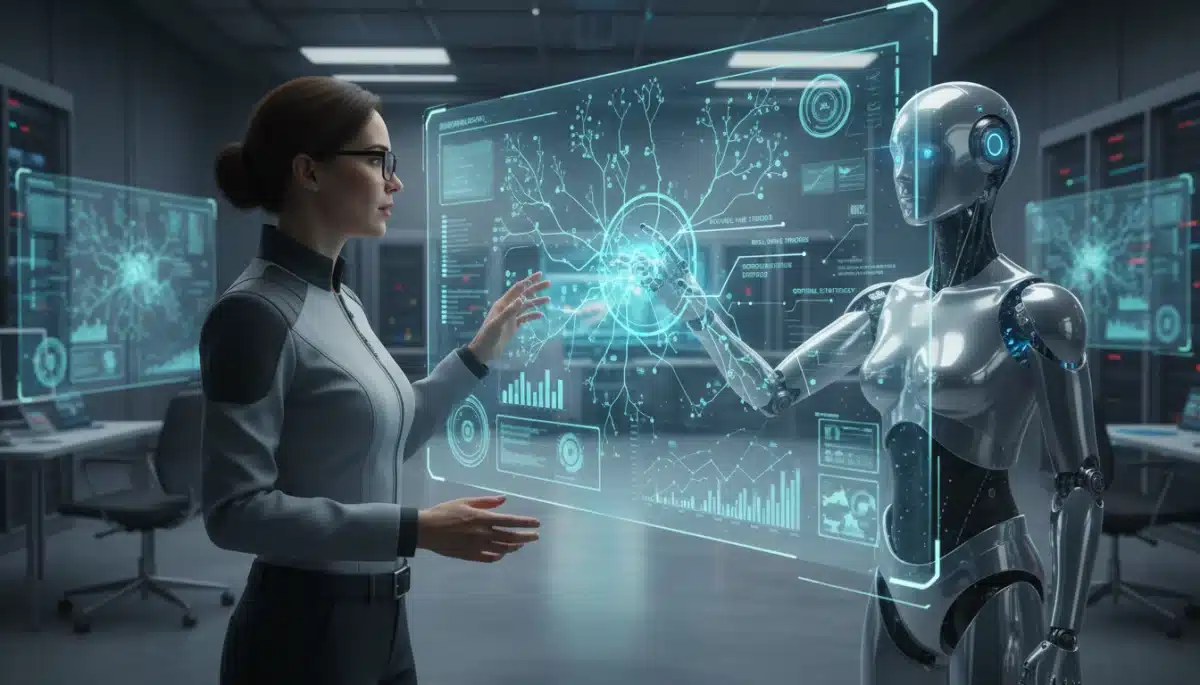
In today’s data-rich environment, extracting meaningful insights from vast quantities of information is a formidable challenge. This is where AI-powered data analysis becomes an invaluable asset in human-machine collaboration. Machines can process and analyze datasets far beyond human capacity, identifying patterns, trends, and correlations that would otherwise remain hidden. This capability empowers human decision-makers with a deeper understanding of market dynamics, customer behavior, and operational efficiencies.
Imagine a sales team trying to predict market shifts or a marketing department attempting to personalize customer experiences. Without AI, these tasks are incredibly time-consuming and often based on incomplete information. AI algorithms can sift through historical data, real-time feeds, and external factors to provide predictive analytics and prescriptive recommendations. This doesn’t replace human strategists; instead, it provides them with the intelligence needed to formulate more effective strategies and make more confident decisions.
Leveraging Predictive Analytics
Predictive analytics, driven by AI, offers a window into future possibilities, allowing businesses to anticipate challenges and opportunities. This foresight is a significant competitive advantage.
- Market Forecasting: AI models can predict market trends, helping businesses adapt their strategies proactively.
- Customer Behavior Prediction: Understanding future customer actions allows for highly targeted marketing and product development.
- Operational Optimization: Predicting equipment failures or supply chain disruptions enables preventative measures, reducing downtime and costs.
By effectively integrating AI for data analysis, organizations can move from reactive problem-solving to proactive strategic planning. This symbiotic relationship between human expertise and machine intelligence is a powerful driver for innovation and sustained growth, ensuring that decisions are always informed by the most comprehensive data available.
Strategy 3: Enhanced Customer Service with AI Chatbots and Virtual Assistants
Customer service is a critical touchpoint for any business, and human-machine collaboration is dramatically reshaping this area. AI-powered chatbots and virtual assistants are no longer just rudimentary response systems; they are sophisticated tools capable of handling a wide range of inquiries, providing instant support, and even personalizing interactions. This frees up human customer service representatives to address more complex, sensitive, and high-value customer issues, where empathy and nuanced understanding are paramount.
These intelligent agents can operate 24/7, providing consistent support across multiple channels. They can quickly access vast knowledge bases, process natural language, and even learn from interactions to improve their responses over time. For example, a customer might use a chatbot to track an order, troubleshoot a common technical issue, or find information about a product. If the query escalates beyond the bot’s capabilities, it can seamlessly transfer the customer to a human agent, providing all the context from the previous interaction. This ensures a smooth and efficient customer journey.
Optimizing the Customer Journey
The strategic deployment of AI in customer service optimizes the entire customer journey, leading to higher satisfaction and operational efficiency. It’s about providing the right support at the right time.
- Instant Responses: Chatbots provide immediate answers to common questions, reducing wait times.
- Personalized Interactions: AI can tailor responses based on customer history and preferences, enhancing the experience.
- Agent Augmentation: Virtual assistants can provide human agents with real-time information and suggestions, improving their effectiveness.
Implementing AI chatbots and virtual assistants represents a significant leap forward in customer engagement. It allows businesses to scale their support operations, maintain high service quality, and ensure that human agents can focus on building deeper relationships and resolving critical issues, ultimately fostering greater customer loyalty.
Strategy 4: Collaborative Robotics in Manufacturing and Logistics
The manufacturing and logistics sectors are undergoing a profound transformation through the integration of collaborative robots, or cobots. Unlike traditional industrial robots that operate in isolation, cobots are designed to work safely alongside human employees, assisting with tasks that require precision, strength, or repetitive motion. This collaboration significantly boosts productivity, improves safety, and enhances the overall efficiency of production and supply chain processes.
Imagine a scenario where a cobot handles the heavy lifting or precise assembly of components, while a human worker performs quality control, intricate wiring, or adjusts sensitive parts. This division of labor leverages the machine’s strength and accuracy with the human’s dexterity and cognitive oversight. Cobots can be easily reprogrammed for different tasks, offering flexibility that traditional automation often lacks. This adaptability is crucial in dynamic production environments where product lines and demands can change rapidly.
Driving Efficiency with Cobots
Cobots are not just tools; they are partners that enhance human capabilities on the factory floor and in warehouses, leading to measurable improvements in output and safety.
- Increased Throughput: Cobots can work continuously without fatigue, significantly increasing production rates.
- Improved Ergonomics: By taking on strenuous tasks, cobots reduce the risk of injury for human workers.
- Enhanced Quality Control: Their precision ensures consistent product quality, minimizing defects.
The adoption of collaborative robotics is a testament to the power of human-machine collaboration in physical workspaces. It allows US businesses to optimize their manufacturing and logistics operations, making them more competitive, safer, and more responsive to market demands, ultimately driving higher productivity and profitability.
Strategy 5: AI-Assisted Creativity and Content Generation
While creativity has long been considered a uniquely human domain, AI is increasingly proving to be a powerful assistant in creative processes and content generation. This strategy involves leveraging AI tools to brainstorm ideas, generate drafts, optimize content for specific audiences, and even create visual assets. This collaboration doesn’t replace human creativity but amplifies it, allowing designers, writers, and marketers to produce higher quality and more impactful work at an accelerated pace.
For example, a marketing team might use AI to analyze vast amounts of consumer data to identify trending topics and optimal messaging strategies. An AI writing assistant could then generate various headlines or initial drafts for blog posts, social media updates, or ad copy, which human editors can refine, personalize, and imbue with unique brand voice. Similarly, graphic designers can use AI-powered tools to quickly generate multiple design variations or enhance images, freeing them to focus on conceptualization and artistic direction.
Augmenting Creative Workflows
AI-assisted creativity redefines the creative workflow, making it more efficient and innovative. It’s about empowering humans to achieve more with intelligent tools.
- Idea Generation: AI can suggest novel concepts and themes based on data analysis.
- Content Optimization: Tools can analyze content for SEO, readability, and audience engagement.
- Rapid Prototyping: AI can quickly generate various creative assets, accelerating the design process.
This strategy transforms creative industries by allowing human professionals to transcend the mundane aspects of content creation and focus on strategic storytelling and emotional connection. The synergy between human imagination and AI’s processing power leads to a substantial boost in creative output and overall productivity within US workplaces.
Strategy 6: Predictive Maintenance and Smart Monitoring
In industries reliant on complex machinery and infrastructure, unexpected equipment failures can lead to significant downtime, costly repairs, and substantial productivity losses. Human-machine collaboration addresses this challenge through predictive maintenance and smart monitoring systems. These AI-driven solutions continuously monitor the performance of machinery, analyze data from sensors, and predict potential failures before they occur. This allows human maintenance teams to intervene proactively, performing repairs or replacements during scheduled downtime, rather than reacting to critical breakdowns.
Consider a manufacturing plant with hundreds of machines. Manually inspecting each one for potential issues is labor-intensive and often inefficient. AI-powered sensors can detect subtle anomalies in vibration, temperature, or energy consumption, signaling an impending problem. The system alerts human technicians, providing them with detailed diagnostic information, allowing them to pinpoint the exact issue and plan their intervention. This not only minimizes disruptions but also extends the lifespan of equipment and optimizes resource allocation.
Ensuring Operational Continuity
Predictive maintenance is a game-changer for operational continuity, transforming reactive maintenance into a strategic, data-driven process that significantly reduces costs and enhances reliability.
- Reduced Downtime: Proactive repairs prevent unexpected failures, keeping operations running smoothly.
- Optimized Maintenance Schedules: AI determines the ideal time for maintenance, preventing unnecessary interventions.
- Cost Savings: Avoiding catastrophic failures and extending equipment life leads to substantial cost reductions.
By combining the vigilance of AI with the expertise of human technicians, businesses can achieve unparalleled levels of operational efficiency and reliability. This strategy ensures that US workplaces can maintain peak performance, minimizing disruptions and maximizing the value derived from their physical assets.
Strategy 7: AI-Enhanced Training and Skill Development
The rapid pace of technological change necessitates continuous learning and skill development within the workforce. Human-machine collaboration plays a pivotal role in this area through AI-enhanced training programs and personalized learning platforms. AI can analyze individual learning styles, identify skill gaps, and tailor educational content to meet specific needs, making training more engaging, effective, and efficient. This ensures that employees are always equipped with the latest skills, driving productivity and adaptability across the organization.
Traditional training methods often adopt a one-size-fits-all approach, which can be inefficient for diverse workforces. AI-powered platforms, however, can adapt to each learner’s progress, offering personalized feedback, recommending relevant modules, and even simulating real-world scenarios for practice. For instance, an AI tutor can guide employees through complex software interfaces, providing instant corrections and explanations. This not only accelerates the learning process but also ensures a deeper understanding and retention of new knowledge.
Personalizing the Learning Journey
AI-enhanced training transforms professional development into a highly personalized and effective journey, fostering a culture of continuous improvement within the workforce.
- Adaptive Learning Paths: AI adjusts content difficulty and focus based on individual performance.
- Skill Gap Analysis: Systems can identify areas where employees need further development.
- Immersive Simulations: AI creates realistic training environments for practical skill acquisition.
By investing in AI-enhanced training, US workplaces can cultivate a highly skilled and adaptable workforce, ready to embrace new technologies and challenges. This strategy is critical for long-term productivity gains, ensuring that human capital remains at the forefront of innovation and operational excellence.
| Key Strategy | Productivity Impact |
|---|---|
| Intelligent Automation | Frees human talent from repetitive tasks, boosting focus on strategic work. |
| AI Data Analysis | Provides deep, actionable insights for smarter, data-driven decisions. |
| Collaborative Robotics | Increases efficiency and safety in manufacturing and logistics. |
| AI-Enhanced Training | Develops adaptable, skilled workforce through personalized learning. |
Frequently Asked Questions About Human-Machine Collaboration
Human-machine collaboration involves integrating human intellect and AI capabilities to achieve enhanced productivity and innovation. It focuses on augmenting human skills with machine efficiency rather than replacement, creating a synergistic work environment where both excel.
It boosts productivity by automating repetitive tasks, providing data-driven insights for better decisions, enhancing customer service, improving manufacturing efficiency, and fostering continuous skill development through AI-powered training, allowing humans to focus on higher-value work.
While some tasks may be automated, human-machine collaboration generally leads to job transformation rather than mass replacement. It creates new roles focused on AI management, data interpretation, and strategic oversight, requiring workers to adapt and upskill.
Virtually all industries can benefit, but manufacturing, logistics, customer service, healthcare, finance, and creative fields are seeing significant impacts. Any sector with repetitive tasks, large data volumes, or a need for precision and rapid response can leverage these strategies.
Begin by identifying repetitive tasks suitable for automation and areas where data insights are lacking. Invest in pilot programs, provide employee training, and focus on integrating AI tools that complement human skills, fostering a culture of continuous adaptation and learning.
Conclusion
The integration of human intelligence with machine capabilities is not merely a technological trend; it is a fundamental shift in how work is conceived and executed. The seven innovative human-machine collaboration strategies discussed offer a clear roadmap for US workplaces to significantly boost productivity this year. By strategically automating repetitive tasks, leveraging AI for data analysis, enhancing customer service, deploying collaborative robotics, augmenting creativity, implementing predictive maintenance, and personalizing skill development, businesses can unlock new levels of efficiency, innovation, and resilience. Embracing this synergy is essential for staying competitive and fostering a future where humans and machines work in harmony, driving progress and creating unprecedented value across all sectors of the American economy.
