Smart Cities 2.0: US Urban Innovation with 4 Key Tech
Anúncios
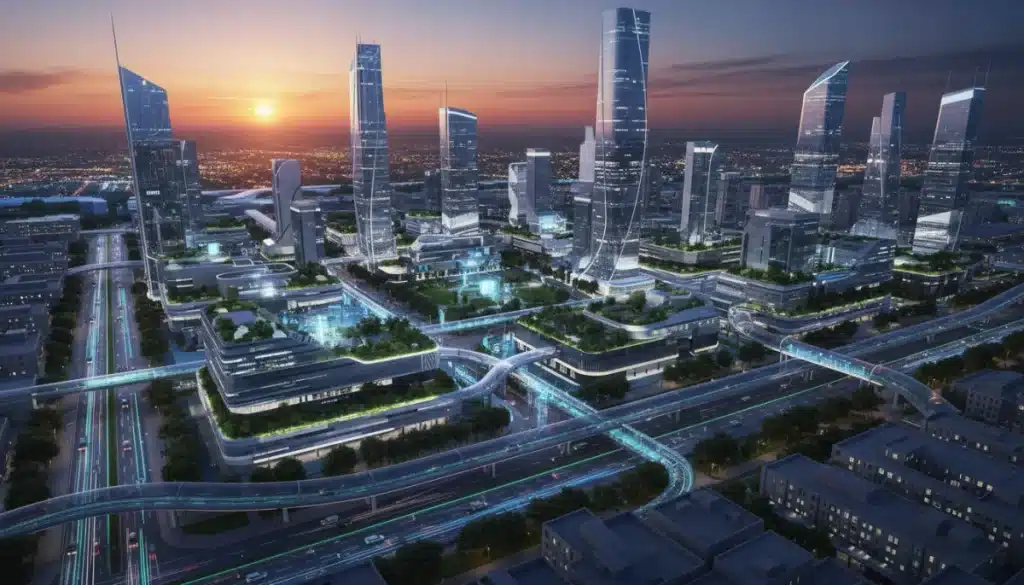
Smart cities in the US are undergoing a significant transformation, driven by the integration of artificial intelligence, the Internet of Things, 5G connectivity, and blockchain, fundamentally reshaping urban living and infrastructure.
The concept of smart cities US innovation is rapidly transitioning from futuristic vision to tangible reality across the United States. This decade marks a pivotal era where advanced technologies are not merely enhancing urban efficiency but fundamentally redefining how cities function, interact with their inhabitants, and address complex challenges. From optimizing traffic flow to improving public safety and fostering sustainable environments, the convergence of cutting-edge innovations promises a more connected, resilient, and livable urban future for millions of Americans.
Anúncios
Artificial Intelligence: The Brain of Future Cities
Artificial Intelligence (AI) serves as the analytical core of smart cities, enabling unprecedented levels of data processing and predictive capabilities. By transforming raw urban data into actionable insights, AI systems empower city planners and administrators to make more informed decisions, leading to optimized resource allocation and improved citizen services.
The deployment of AI in urban environments extends beyond simple automation. It encompasses sophisticated machine learning algorithms that can detect patterns, forecast trends, and even anticipate potential problems before they escalate. This proactive approach is crucial for managing the dynamic complexities of modern metropolises.
Optimizing Urban Operations with AI
AI’s impact on urban operations is vast, touching nearly every aspect of city management. Its ability to process and learn from massive datasets makes it an invaluable tool for enhancing efficiency and responsiveness.
- Traffic Management: AI-powered systems analyze real-time traffic data from sensors and cameras to dynamically adjust signal timings, reroute vehicles, and predict congestion, significantly reducing commute times and emissions.
- Public Safety: AI algorithms can analyze surveillance footage for unusual activities, identify potential threats, and assist emergency services in rapid response, making communities safer.
- Waste Management: Intelligent waste bins equipped with sensors can signal when they are full, allowing for optimized collection routes and reducing operational costs.
These applications demonstrate how AI is not just a technological upgrade but a fundamental shift in urban governance, moving towards more intelligent and adaptive systems. The integration of AI helps cities become more resilient to unforeseen challenges and better equipped to serve their populations.
Internet of Things (IoT): The Sensory Network
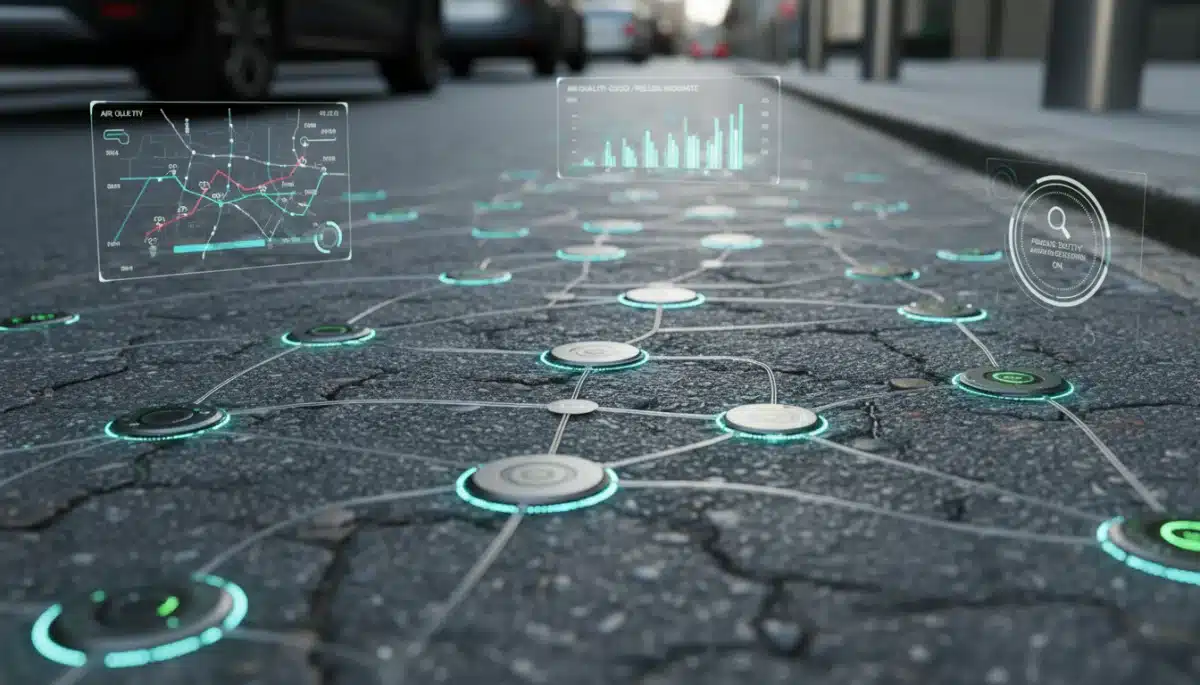
The Internet of Things (IoT) provides the sensory nervous system for smart cities, connecting countless devices and sensors that collect real-time data from the urban environment. This vast network of interconnected objects forms the foundation upon which AI and other advanced technologies operate, offering a granular view of city dynamics.
From smart streetlights that adjust illumination based on ambient light and pedestrian presence to environmental sensors monitoring air and water quality, IoT devices are continuously gathering critical information. This data stream is essential for understanding urban patterns, identifying inefficiencies, and responding to immediate needs.
Connecting the Urban Fabric with IoT
IoT devices are transforming how cities interact with their physical infrastructure and citizens. Their pervasive nature allows for comprehensive data collection, creating a living, breathing digital twin of the city.
Anúncios
- Smart Infrastructure: Sensors embedded in roads, bridges, and buildings can monitor structural integrity, detecting wear and tear before it becomes critical, thereby extending infrastructure lifespan and enhancing safety.
- Environmental Monitoring: IoT sensors track pollution levels, temperature, and humidity, providing valuable data for environmental protection efforts and public health warnings.
- Resource Management: Smart meters for water and electricity enable real-time consumption monitoring, helping residents and utilities manage resources more efficiently and identify leaks or wastage.
The proliferation of IoT devices creates a rich tapestry of data that, when analyzed by AI, empowers cities to operate with unprecedented levels of insight and precision. This interconnectedness is vital for building truly responsive and sustainable urban environments.
5G Connectivity: The Backbone of Real-Time Data
Fifth-generation (5G) wireless technology is more than just a faster internet connection; it is the critical backbone enabling the full potential of smart cities. Its ultra-low latency, massive capacity, and increased bandwidth are essential for handling the immense data flows generated by IoT devices and powering AI applications in real-time.
Without 5G, the seamless integration and instantaneous communication required for autonomous vehicles, remote medical services, and comprehensive public safety systems would be significantly hampered. It ensures that data collected by sensors can be transmitted, processed, and acted upon almost instantly, making urban operations truly responsive.
Unlocking New Possibilities with 5G
The capabilities of 5G are unlocking a new generation of smart city applications that were previously unimaginable due to technological limitations. Its robust infrastructure supports the demanding requirements of advanced urban systems.
- Autonomous Systems: 5G provides the reliable and low-latency communication necessary for autonomous vehicles, drones, and robots to operate safely and efficiently within city limits, facilitating smart transportation and logistics.
- Enhanced Public Services: Remote healthcare, augmented reality for maintenance, and immersive educational experiences become feasible with 5G’s high-speed and dependable connectivity, improving quality of life for citizens.
- Massive IoT Deployments: The ability of 5G to connect millions of devices per square kilometer means cities can deploy vast networks of sensors and actuators without compromising performance, leading to more comprehensive data collection and control.
The widespread deployment of 5G networks across the US is a fundamental enabler for the next wave of urban innovation, allowing cities to leverage AI and IoT to their fullest extent. It creates an environment where instantaneous decisions and actions can be made based on real-time information.
Blockchain: Ensuring Trust and Security in Urban Data
As smart cities become increasingly data-driven, the need for robust security, transparency, and trust becomes paramount. Blockchain technology, with its decentralized and immutable ledger system, offers a powerful solution to these challenges, ensuring the integrity and security of urban data and transactions.
From managing identity and land records to securing energy grids and facilitating transparent governance, blockchain provides a framework that can prevent tampering, enhance privacy, and build public confidence in smart city initiatives. Its inherent security features are crucial for protecting sensitive citizen data and critical infrastructure.
Building Trust and Efficiency with Blockchain
Blockchain’s unique properties make it an ideal technology for addressing some of the most critical concerns in a hyper-connected urban environment. It offers a new paradigm for data management and interaction.
- Secure Data Sharing: Blockchain can create secure and auditable records for data shared between various city departments, ensuring data integrity and preventing unauthorized access or modification.
- Transparent Governance: Smart contracts on a blockchain can automate and verify government processes, such as permit applications or voting systems, increasing transparency and reducing corruption.
- Energy Management: Decentralized energy grids leveraging blockchain can facilitate peer-to-peer energy trading, incentivize renewable energy use, and enhance grid resilience against cyber threats.
The integration of blockchain into smart city frameworks is crucial for establishing a foundation of trust and security, which is essential for citizen adoption and the long-term success of urban innovation projects. It ensures that the digital infrastructure is as robust as the physical one.
Integrating Technologies for Holistic Urban Development
The true power of smart cities emerges not from individual technologies but from their synergistic integration. AI, IoT, 5G, and blockchain are not standalone solutions; they are interconnected components of a comprehensive ecosystem designed to create more efficient, sustainable, and livable urban environments. This convergence allows for a holistic approach to urban development.
Consider a scenario where IoT sensors collect real-time traffic data, which is then transmitted via 5G networks to an AI system. This AI analyzes the data to predict congestion and optimize traffic light timings. Simultaneously, blockchain could secure the data transmission, ensuring its integrity and providing a transparent record of traffic patterns for urban planning. This integrated approach maximizes the benefits of each technology.
Challenges and Opportunities in Integration
While the benefits of integrating these technologies are immense, there are also significant challenges that cities must address to fully realize their potential. Overcoming these hurdles will define the success of smart city initiatives.
- Interoperability: Ensuring that diverse systems and devices from different vendors can communicate and share data seamlessly is a major technical hurdle. Standardized protocols are essential.
- Data Privacy and Ethics: The vast amount of data collected raises concerns about privacy and ethical use. Robust regulations and transparent policies are needed to protect citizen data.
- Funding and Investment: Implementing and maintaining these advanced infrastructures requires substantial investment, necessitating innovative funding models and public-private partnerships.
Despite these challenges, the opportunities presented by integrated smart city technologies are transformative. They promise to create urban centers that are not only technologically advanced but also deeply responsive to the needs and aspirations of their inhabitants, fostering a higher quality of life and economic prosperity.
The Path Forward: Smart Cities in the US This Decade
The United States is at the forefront of the smart city revolution, with numerous municipalities actively deploying and experimenting with these transformative technologies. The lessons learned from early adopters are paving the way for broader implementation, scaling solutions that prove effective and addressing challenges proactively.
This decade will see an acceleration in the adoption of AI, IoT, 5G, and blockchain as cities strive to become more resilient, sustainable, and inclusive. The focus will increasingly shift from isolated pilot projects to integrated, city-wide ecosystems that deliver tangible benefits to residents and businesses alike. The drive for innovation is strong, propelled by a desire for better urban living.
Key Trends and Future Outlook
Several key trends will shape the trajectory of smart cities in the US over the coming years, indicating a clear direction for urban development and technological integration.
- Citizen-Centric Design: Future smart city initiatives will increasingly prioritize the needs and feedback of citizens, ensuring that technology serves to enhance human experiences rather than merely automating processes.
- Sustainability at the Core: Environmental concerns will drive the adoption of smart technologies aimed at reducing carbon footprints, conserving resources, and promoting green infrastructure.
- Enhanced Cybersecurity: As cities become more connected, the focus on cybersecurity will intensify, with blockchain and other advanced security measures becoming standard to protect critical infrastructure and data.
The vision for smart cities in the US is one of continuous evolution, driven by technological advancements and a commitment to creating better urban futures. The integration of AI, IoT, 5G, and blockchain forms the bedrock of this transformation, promising a decade of unprecedented innovation and progress in urban living.
| Key Technology | Urban Impact |
|---|---|
| Artificial Intelligence (AI) | Enables predictive analytics for traffic, public safety, and resource optimization, making cities more responsive and efficient. |
| Internet of Things (IoT) | Connects devices and sensors to collect real-time urban data, forming the sensory network for smart infrastructure and environmental monitoring. |
| 5G Connectivity | Provides ultra-fast, low-latency communication, crucial for real-time data transfer, autonomous systems, and massive IoT deployments. |
| Blockchain | Ensures data integrity, security, and transparency for urban transactions and governance, building trust in digital city services. |
Frequently Asked Questions About Smart City Innovation
Smart City 2.0 in the US refers to an advanced urban environment leveraging integrated technologies like AI, IoT, 5G, and blockchain to enhance sustainability, efficiency, and livability. It moves beyond basic connectivity to proactive, data-driven urban management and citizen-centric services, reflecting a deeper level of technological integration and urban planning.
AI acts as the analytical brain, processing vast amounts of urban data to provide predictive insights. This helps US cities optimize traffic flow, improve public safety through pattern recognition, and manage resources like waste and energy more efficiently, leading to better decision-making and operational effectiveness.
5G connectivity is vital because it offers ultra-low latency, high bandwidth, and massive device capacity. These features enable real-time data transmission for IoT sensors, reliable communication for autonomous vehicles, and support for advanced AI applications, making instantaneous urban responses and services possible across US cities.
Blockchain ensures data integrity, security, and transparency within smart city ecosystems. It can secure sensitive citizen data, facilitate transparent governance through smart contracts, and enable secure energy trading. Its decentralized nature builds trust and resilience in digital urban infrastructure across US metropolitan areas.
Key challenges include ensuring interoperability between diverse systems, addressing data privacy and ethical concerns related to extensive data collection, and securing adequate funding for large-scale infrastructure projects. Overcoming these requires robust standards, clear policies, and innovative public-private partnerships to fully realize smart city potential in the US.
Conclusion
The journey towards fully realized smart cities in the US is an exciting and complex endeavor, profoundly shaped by the rapid integration of artificial intelligence, the Internet of Things, 5G connectivity, and blockchain. These four technologies are not merely incremental improvements but foundational pillars enabling a new generation of urban living. As American cities continue to evolve, their ability to harness these innovations will determine their success in creating more efficient, sustainable, secure, and ultimately, more livable environments for their citizens. The ongoing development promises a future where urban spaces are intelligently responsive to the needs of both people and the planet.
