From FOMO to JOMO: Embracing Joy of Missing Out in Digital 2026

Anúncios
The journey from FOMO to JOMO in 2026 is about consciously choosing contentment with one’s current reality, prioritizing personal well-being over the relentless pursuit of perceived online experiences, and fostering a healthier relationship with digital technology.
In an increasingly hyper-connected world, the constant deluge of information and curated online lives has amplified a pervasive modern anxiety: the Fear of Missing Out (FOMO). By 2026, this sensation has become almost ubiquitous, driving many into a cycle of ceaseless checking and digital comparison. However, a counter-movement is gaining significant traction: the Joy of Missing Out (JOMO). This shift, from FOMO to JOMO, isn’t about isolation but a deliberate choice to prioritize personal well-being, presence, and authentic experiences over the endless digital scroll.
Anúncios
Understanding the Evolution of FOMO in 2026
The Fear of Missing Out (FOMO) has evolved significantly in 2026, driven by advanced algorithms and pervasive digital platforms. What began as a mild social anxiety has morphed into a significant concern for mental health, influencing daily decisions and overall life satisfaction. The constant availability of information about others’ lives, often idealized and filtered, creates an illusion of perpetual excitement happening elsewhere.
This intensified FOMO is no longer just about social events; it extends to career opportunities, investment trends, and even personal development courses advertised incessantly online. The pressure to keep up, to be perpetually informed and engaged, has become immense. Social media platforms, with their intricate notification systems and personalized feeds, are expertly designed to exploit this primal human desire for connection and belonging, turning it into a source of chronic anxiety.
The Psychological Impact of Constant Connectivity
Constant connectivity, while offering convenience, has a profound psychological toll. The brain is always on alert, anticipating the next notification or update, leading to increased stress and decreased attention spans. This state of hyper-vigilance erodes our ability to focus on tasks and enjoy the present moment.
- Increased Anxiety: The fear of being left out can trigger chronic anxiety.
- Lower Self-Esteem: Constant comparison with others’ highlight reels diminishes self-worth.
- Reduced Productivity: Frequent interruptions from notifications fragment focus.
- Sleep Disturbances: Blue light exposure and mental overstimulation before bed disrupt sleep patterns.
The cumulative effect of these impacts is a society that feels more connected yet increasingly lonely and overwhelmed. Recognizing the depth of this issue is the first step towards seeking more balanced digital habits.
In 2026, understanding the mechanisms behind FOMO is crucial. It’s not merely a personal failing but a systemic issue fueled by digital architecture designed for maximum engagement. Acknowledging this broader context helps individuals detach from self-blame and empowers them to seek solutions that prioritize their mental well-being.
Defining JOMO: The Joy of Missing Out
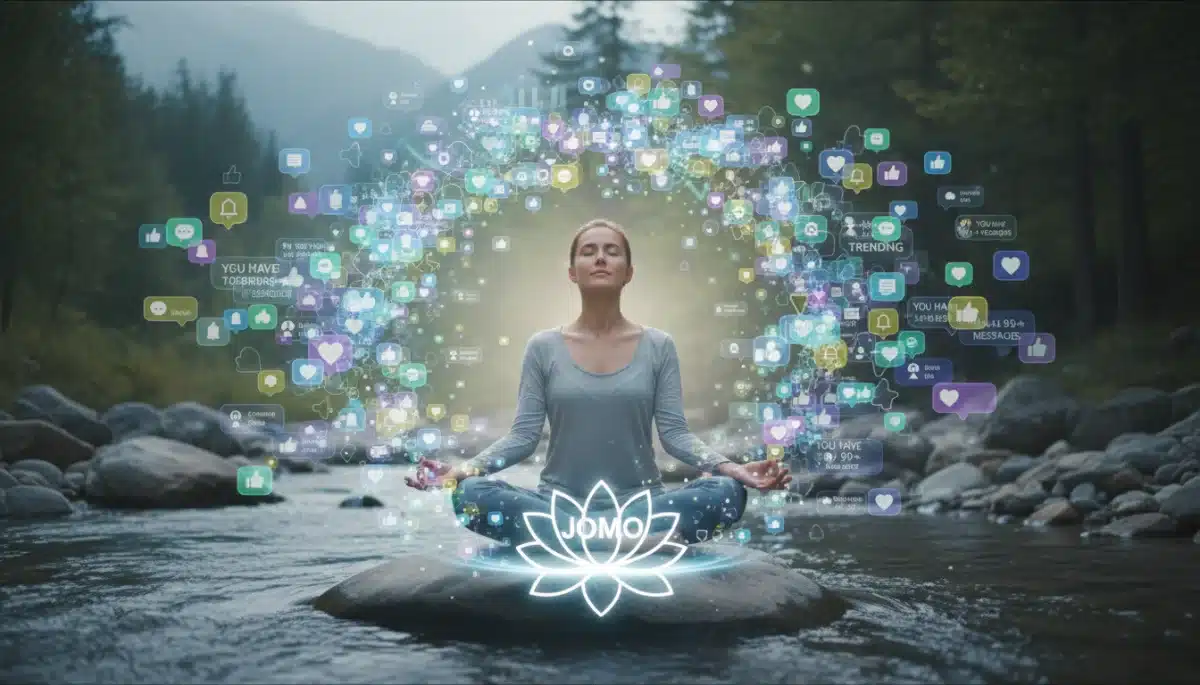
The Joy of Missing Out (JOMO) is a conscious and deliberate shift in mindset, embracing the contentment derived from disengaging from the digital world and focusing on present, real-life experiences. It’s not about total abstinence from technology, but rather a mindful approach to its use, valuing personal peace and authentic connections over perceived online obligations. JOMO encourages individuals to find happiness in their current situation, without the need for constant external validation or comparison.
Anúncios
This philosophy champions the idea that true fulfillment comes from within and from genuine interactions, not from the endless pursuit of what others are doing or experiencing online. It’s about reclaiming personal time, space, and mental energy that might otherwise be consumed by digital distractions. Embracing JOMO means making intentional choices about how and when to engage with technology, ensuring that it serves as a tool rather than a master.
Key Principles of JOMO
JOMO is built upon several core principles that guide individuals towards a more balanced and fulfilling digital life. These principles help in cultivating a sense of calm and self-sufficiency, reducing the anxiety often associated with FOMO.
- Intentional Disconnection: Deliberately scheduling time away from screens and notifications.
- Presence over Perfection: Valuing the current moment and its imperfections over a curated online ideal.
- Self-Compassion: Accepting that it’s okay not to be constantly available or engaged with every trend.
- Authentic Engagement: Prioritizing deep, meaningful interactions in real life.
By integrating these principles, individuals can begin to experience a profound sense of liberation. JOMO allows for a rediscovery of hobbies, a strengthening of personal relationships, and a deeper connection with oneself. It provides a much-needed antidote to the relentless pace of digital life, fostering a sense of peace and genuine joy.
Practical Strategies for Embracing JOMO in 2026
Transitioning from FOMO to JOMO requires conscious effort and the implementation of practical strategies. In 2026, with technology deeply embedded in our lives, these strategies focus on mindful integration rather than complete rejection. The goal is to create boundaries that protect mental well-being without isolating oneself entirely.
One fundamental step is to audit your digital habits. Understand where and how you spend your time online. Many apps now offer usage reports that can provide valuable insights into your digital consumption patterns. This awareness is the foundation upon which healthier habits can be built.
Setting Digital Boundaries
Establishing clear digital boundaries is paramount. This involves defining specific times and spaces where technology is limited or completely off-limits. These boundaries help in carving out dedicated time for other activities and fostering a sense of control over your digital life.
- Designated ‘No-Phone’ Zones: Implement rules like no phones at the dinner table or in the bedroom.
- Scheduled Digital Detoxes: Plan short periods, perhaps an hour a day or a full weekend, completely offline.
- Notification Management: Turn off non-essential notifications to reduce constant interruptions.
- Time-Limited App Usage: Use app timers to restrict usage of social media or other distracting applications.
These boundaries are not about deprivation but about intentional living. They allow space for genuine rest, reflection, and engagement with the physical world. Consistently applying these rules helps retrain the brain to seek contentment offline.
Another effective strategy is to cultivate offline hobbies and interests. When you have engaging activities that bring you joy away from screens, the pull of the digital world diminishes naturally. This could be anything from reading a physical book, gardening, cooking, or pursuing a creative art form. The key is to find activities that genuinely absorb your attention and provide a sense of accomplishment or relaxation.
The Role of Mindfulness and Presence
At the heart of embracing JOMO lies the cultivation of mindfulness and presence. These practices are essential tools for grounding oneself in the current moment, reducing the mind’s tendency to wander into anxieties about past events or future possibilities, including those fueled by digital comparisons. Mindfulness helps us observe our thoughts and feelings without judgment, creating a buffer against external pressures.
In 2026, the constant stimulation of digital devices often pulls us away from present realities. Practicing mindfulness involves intentionally bringing one’s attention to the sensations, thoughts, and emotions occurring in the present moment, without getting carried away by them. This conscious awareness can transform how we interact with both our internal and external worlds.
Techniques for Cultivating Presence
Integrating mindfulness into daily life doesn’t require hours of meditation, though that can be beneficial. Simple techniques can be woven into everyday routines to enhance presence and reduce digital dependency.
- Mindful Breathing: Taking a few deep, conscious breaths throughout the day to re-center.
- Sensory Awareness: Paying close attention to sights, sounds, smells, tastes, and textures during routine activities.
- Body Scan Meditation: Briefly focusing attention on different parts of the body to notice sensations.
- Single-Tasking: Deliberately focusing on one task at a time, avoiding the urge to multitask with digital devices.
These practices help in developing a greater appreciation for the small, often overlooked moments of daily life. By being more present, the allure of what might be happening elsewhere online diminishes, replaced by a deeper engagement with one’s immediate surroundings and experiences. This shift fosters a profound sense of contentment and reduces the psychological grip of FOMO.
Ultimately, mindfulness and presence are not just coping mechanisms; they are pathways to a richer, more meaningful existence. They empower individuals to choose where their attention goes, thereby reclaiming agency over their mental landscape in an increasingly distracting world.
Building Authentic Connections in a Digital Age
While JOMO advocates for reduced digital dependency, it does not mean isolation. On the contrary, it emphasizes the importance of building authentic, meaningful connections that are often diluted by superficial online interactions. In 2026, the challenge is to leverage digital tools for genuine connection without falling into the trap of endless scrolling and passive consumption.
The quality of our relationships profoundly impacts our well-being. JOMO encourages shifting focus from broad, shallow online networks to nurturing deeper bonds with a select group of people in real life. This often means actively seeking out face-to-face interactions, engaging in meaningful conversations, and sharing experiences that build genuine intimacy and trust.
Prioritizing Real-World Interactions
Making a conscious effort to prioritize real-world interactions over purely digital ones is a cornerstone of JOMO. This involves planning activities that bring people together in physical spaces and dedicating undistracted time to these encounters.
- Scheduled Meet-ups: Regularly plan coffee dates, meals, or activities with friends and family.
- Active Listening: During conversations, fully engage and listen without checking your phone.
- Community Involvement: Join local groups, volunteer, or participate in community events.
- Shared Experiences: Engage in hobbies or activities with others that foster camaraderie.
By investing in these types of interactions, individuals can experience a deeper sense of belonging and support, which are crucial for mental health. These authentic connections provide a strong antidote to the feelings of loneliness and inadequacy that FOMO often generates. The joy derived from true human connection far surpasses the fleeting satisfaction of online validation.
Furthermore, when using digital platforms, JOMO suggests being intentional. Instead of mindlessly scrolling, use social media to plan real-world gatherings, share personal updates with close friends, or engage in meaningful discussions rather than just consuming content. This mindful approach transforms digital tools into facilitators of connection, not substitutes for it.
The Long-Term Benefits of Embracing JOMO
The journey from FOMO to JOMO is not just a temporary escape from digital overload; it represents a sustainable lifestyle change with profound long-term benefits for mental, emotional, and even physical health. By consistently choosing presence and intentionality, individuals can cultivate a more resilient and fulfilling life in the face of ongoing digital evolution.
One of the most significant long-term benefits is a marked improvement in mental clarity and focus. Reducing digital distractions allows the brain to rest and process information more effectively, leading to enhanced creativity and problem-solving skills. The constant barrage of notifications and information can overwhelm cognitive functions, so stepping back provides much-needed mental space.
Sustainable Well-being and Personal Growth
Embracing JOMO fosters a sustainable approach to well-being, moving away from reactive coping mechanisms towards proactive self-care. This shift empowers individuals to take control of their digital habits and, by extension, their overall quality of life.
- Reduced Stress and Anxiety: Less exposure to curated online lives decreases comparison and fear.
- Improved Sleep Quality: Limiting screen time before bed promotes better rest.
- Enhanced Relationships: More genuine, present interactions strengthen bonds.
- Greater Self-Awareness: Time away from external stimuli allows for deeper introspection and understanding of personal needs.
These benefits are cumulative. As individuals practice JOMO, they often report feeling more grounded, content, and in tune with their own values and aspirations. This leads to decisions that are more aligned with personal well-being rather than societal or digital pressures. The long-term adoption of JOMO can truly redefine what it means to live well in a digitally saturated world, providing a blueprint for a more balanced and joyful existence.
Moreover, developing the discipline to choose JOMO builds resilience. It teaches individuals to be less dependent on external validation and more reliant on their inner resources for happiness. This internal strength is invaluable in navigating the complexities of modern life, offering a solid foundation for continuous personal growth.
| Key Aspect | Brief Description |
|---|---|
| FOMO (Fear of Missing Out) | Anxiety stemming from the belief that others are having more fun or better experiences, fueled by social media. |
| JOMO (Joy of Missing Out) | Finding contentment and peace in one’s own activities and choices, disengaging from digital pressures. |
| Digital Boundaries | Setting limits on screen time and technology use to protect mental well-being and foster real-world engagement. |
| Mindfulness Practice | Techniques to stay present and focused, reducing digital distractions and enhancing appreciation for the moment. |
Frequently Asked Questions About JOMO
JOMO, or the Joy of Missing Out, is a feeling of contentment and peace derived from disengaging from social activities or online content, contrasting with FOMO (Fear of Missing Out), which is the anxiety of not being part of exciting events or trends. JOMO emphasizes presence and personal well-being.
Begin by setting small digital boundaries, like designated ‘no-phone’ times during meals or before bed. Engage in offline hobbies, practice mindfulness, and prioritize real-life interactions. Gradually reduce non-essential notifications to reclaim your attention and time.
No, JOMO does not advocate for isolation. Instead, it encourages more authentic and meaningful connections. By reducing superficial digital interactions, you free up time and energy to nurture deeper relationships with friends and family in the real world, enhancing social quality.
The benefits include reduced stress and anxiety, improved mental clarity and focus, better sleep quality, enhanced real-world relationships, and a greater sense of personal contentment and self-awareness. It fosters a more balanced and fulfilling life.
JOMO is an ongoing practice rather than a permanent state. In our constantly evolving digital world, maintaining JOMO requires continuous effort and mindful choices about technology use. It’s about regularly checking in with yourself and adjusting your habits as needed for sustained well-being.
Conclusion
The transition from FOMO to JOMO is more than just a trend; it’s a vital movement towards reclaiming personal well-being in an increasingly digitalized 2026. By understanding the pervasive nature of FOMO and actively implementing strategies for mindful engagement and genuine presence, individuals can cultivate a life rich in authentic experiences and inner peace. Embracing JOMO offers a sustainable path to reduced anxiety, stronger relationships, and a deeper connection with oneself, proving that sometimes, the greatest joy comes from simply being present and content with what you have, rather than constantly chasing what you might be missing online.
